


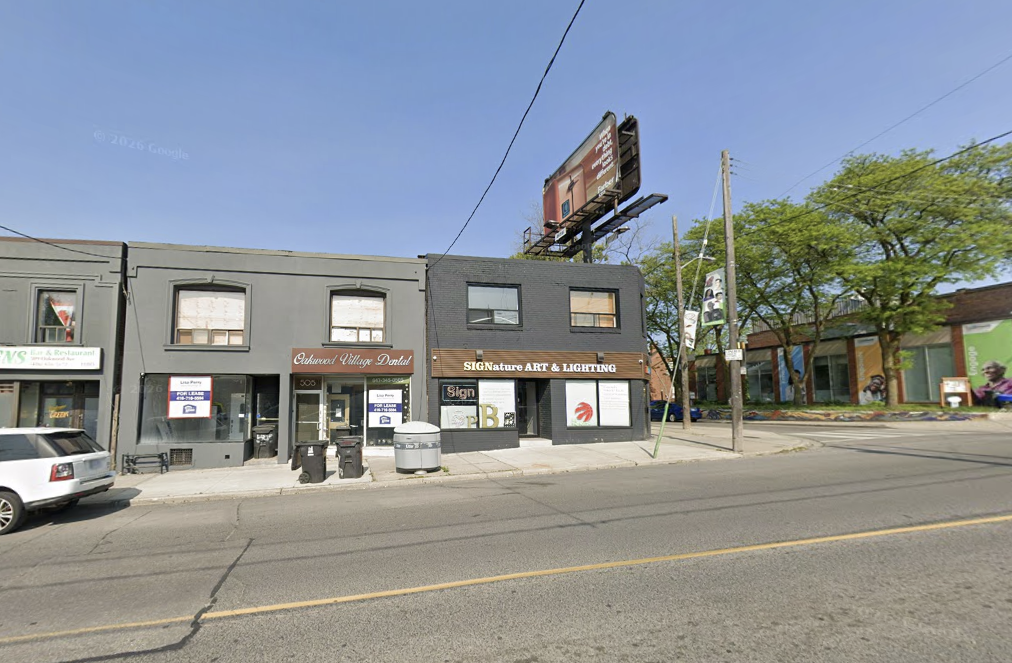
A new planning application has been submitted for the properties at 503–511 Oakwood Avenue and 66–70 Belvidere Avenue, proposing a 13-storey mixed-use building at the intersection of Oakwood Avenue and Belvidere Avenue. On its own, “another condo application” may not catch much attention, but the real significance of this project is where it’s happening!
Much of the recent development activity in this part of the city has clustered closer to Eglinton Avenue West, particularly around the Line 5 corridor. Oakwood Village, by contrast, has seen far fewer opportunities for new condo developments. That’s why this proposal stands out. It brings meaningful density and new housing options to an intersection that has long felt underutilized, despite its proximity to transit, Vaughan Road, and established neighbourhood amenities.

Where the Site Is — and Why It Matters
The subject site occupies a prominent corner on the east side of Oakwood Avenue and the north side of Belvidere Avenue, just south of Vaughan Road. The consolidated parcel stretches across multiple addresses (503–511 Oakwood Avenue & 66–70 Belvidere Avenue), creating frontage on both streets and forming a large, rectangular development block.
This location sits within walking distance of Oakwood Station on Line 5 Eglinton and is also served by multiple TTC bus routes along Oakwood Avenue and Vaughan Road. From a planning perspective, the site falls within a Protected Major Transit Station Area, where policy encourages intensification, transit-oriented design, and a mix of uses.
Yet despite these advantages, the intersection has not fully evolved alongside nearby transit investment. This proposal is an attempt to close that gap.
What’s There Today
Currently, the Oakwood-facing properties are made up of two-storey mixed-use buildings with retail at grade and largely vacant residential units above. Along Belvidere Avenue, the site includes several low-rise residential properties that are vacant and boarded.

In planning terms, this is a classic underutilized site: low density, aging building stock, and limited contribution to the public realm — all in an area where growth is actively encouraged. The existing conditions help explain why the applicant is seeking both an Official Plan Amendment and a Zoning By-law Amendment to unlock redevelopment potential.
What’s Being Proposed
The application proposes a 13-storey, mixed-use mid-rise building designed to introduce new housing while reinforcing Oakwood Avenue’s role as a local main street.
The proposal includes:
- A 13-storey building with a maximum height of approximately 42.9 metres
- A total gross floor area of roughly 10,375 square metres
- 161 residential units, ranging from studios to three-bedroom suites
- Ground-floor retail space fronting Oakwood Avenue and wrapping the corner
- Three levels of underground parking
- A mix of indoor and outdoor amenity spaces integrated throughout the building

Rather than a point tower, the building is organized with a five-storey podium and an eight-storey upper component, allowing the massing to respond differently to Oakwood Avenue and Belvidere Avenue.
Built Form, Height, and Transition
One of the most closely watched aspects of any mid-rise proposal is how it transitions to neighbouring low-rise homes — and this project makes that a central design consideration.
The building steps back above the podium levels, with deeper setbacks introduced on the upper storeys, particularly toward the east where the site abuts lower-density residential properties. These stepbacks are intended to reduce the perceived height from the street and create a more gradual transition in scale.
Along Oakwood Avenue, the podium height reinforces a consistent street wall, framing the sidewalk and supporting a more urban, main-street feel. The upper floors are visually recessed, helping distinguish the building base from the taller residential component above. While 13 storeys will inevitably spark discussion, the design attempts to balance density with sensitivity.
Retail, Streetscape, and the Public Realm
At grade, the proposal introduces new retail space along Oakwood Avenue, helping maintain and potentially strengthen the commercial character of the street. Entrances are oriented toward both Oakwood and Belvidere, reinforcing the corner condition and encouraging pedestrian activity.
The plans also show widened sidewalks, landscaped setbacks, and a mix of trees and planting designed to improve what is currently a tired and fragmented streetscape. Parking, servicing, and loading functions are consolidated and screened within the podium, keeping them largely out of view from the public realm.
If executed well, these elements could meaningfully improve the day-to-day experience of this stretch of Oakwood Avenue.
How This Fits into the Bigger Planning Picture
From a policy standpoint, the proposal aligns with several long-standing City objectives. Oakwood Avenue is identified as an Avenue, where mid-rise growth is encouraged. The site’s location within a Major Transit Station Area further strengthens the case for higher density, mixed-use development.

The application also responds to Oakwood–Vaughan Urban Design Guidelines, which aim to reinforce a village-style identity while accommodating growth. Compared to recent applications closer to Eglinton (many of which are much larger in scale or more clearly tied to the immediate LRT corridor) this project helps distribute growth more evenly through the neighbourhood. In that sense, it’s not just about one building, but about testing whether Oakwood Village can support a broader range of housing forms beyond low-rise homes and small walk-ups.
Why This Proposal Is Worth Watching
Condo options in Oakwood Village remain limited, especially compared to nearby neighbourhoods along Eglinton West. This proposal introduces a scale and type of housing that simply doesn’t exist in meaningful numbers today.
For residents, it raises familiar questions around height, density, and neighbourhood change. For planners and housing watchers, it offers a glimpse at how growth might begin to move south and west from Eglinton as transit infrastructure comes fully online.
Whether or not the proposal is approved in its current form, it sets an important precedent and signals that Oakwood Village is increasingly on the development radar.
For homeowners and buyers in Oakwood Village, applications like this are worth paying attention to. Changes in density, new retail, and transit-oriented development can influence neighbourhood values, buyer demand, and long-term resale — often well before a shovel ever hits the ground. Understanding what’s proposed (and what’s likely to follow) can make a real difference when deciding when to buy, sell, or hold in the area.
Final Thoughts
With most recent intensification focused closer to Eglinton Avenue West, seeing a proposal of this scale at Oakwood and Belvidere suggests a slow but meaningful expansion of where growth is considered appropriate.
As the application moves through the approvals process, expect close attention on built form, transition, and public realm impacts. Regardless of the outcome, it’s a project that will help shape the next phase of conversation around condo living and density in Oakwood Village.
If you’re thinking about buying or selling in Oakwood Village, and would like a clearer picture of how current and proposed developments could impact your property or buying plans, we’re always happy to talk through the neighbourhood and what’s coming next. Send us a message below!


