


Why Frozen Pipes Are a Real Risk in Toronto
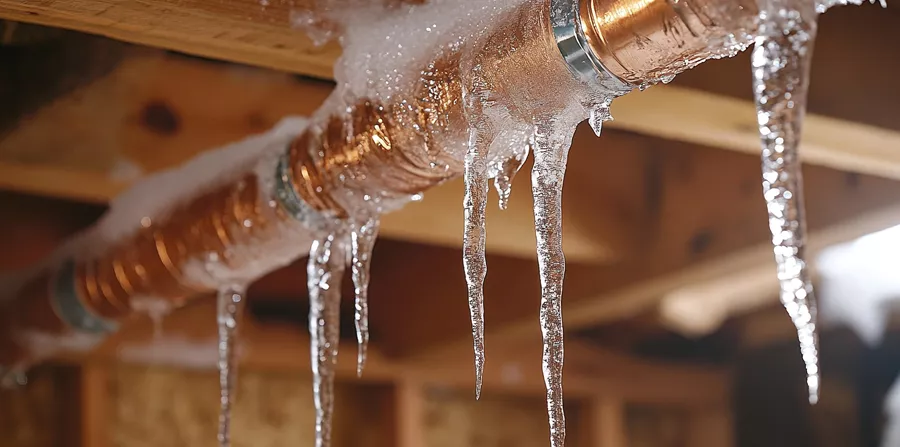
A prolonged cold weather — not just a single freezing night — is what puts household plumbing at risk during winter. Pipes running through exterior walls, basements, garages, and poorly insulated areas are especially vulnerable when temperatures stay below zero for days at a time.
Toronto winters aren’t just about the odd cold night — they’re about sustained stretches of below‑freezing temperatures. That’s when problems start. Pipes don’t usually burst because of a single chilly evening; they fail after days of cold air working its way into exterior walls, basements, garages, and uninsulated spaces.
From what we see during winter listings, renovations, and vacant properties, the highest risk almost always shows up when a home is under‑heated, partially occupied, or left unattended. Snowbirds, estate homes, rentals between tenants, and homes mid‑reno are especially vulnerable.

When You Should Drain Your Pipes
Insurance providers and the Insurance Bureau of Canada consistently point to winter vacancies as one of the leading causes of burst pipes and water damage. In Toronto, this risk is amplified when homes sit empty during extended cold snaps, whether due to travel, renovations, or properties being prepared for sale.
Draining your pipes isn’t something every homeowner needs to do every winter — but in the right situations, it’s one of the simplest ways to avoid major water damage.
You should strongly consider draining your pipes if:
- Your home will be vacant for more than a few days, especially during a cold snap
- You’re leaving the city for an extended period during winter
- The property is under renovation with exposed plumbing
- Heat or power reliability is a concern
This is also where insurance expectations come into play. Many Canadian insurers require homeowners to either maintain heat at a minimum level or shut off and drain the plumbing when a home is vacant. Skipping this step can complicate a water‑damage claim if something goes wrong.
A Simple, No‑Stress Way to Drain Your Pipes
This doesn’t need to be a complicated process. The goal is simply to remove standing water that could freeze and expand.
A basic homeowner‑level approach looks like this:
This month at a glance
Toronto Real Estate Market Snapshot: September 2026
Average price
$1,006,409
▼ 5.1% year over year
Home sales
5,040
▼ 9.0% year over year
New listings
16,500
▲ 36.7% vs. August
Active listings
26,131
▲ 6.7% vs. August
Avg. days on market
51
Unchanged vs. August
The takeaway: Sellers came back in force this fall, but buyers didn't. Sales stayed flat while new listings jumped by more than a third, so buyers have more choice and more time to negotiate.
Read the full September report →Source: TRREB Market Watch, September 2026. Figures are for the Greater Toronto Area.
- Shut off the main water supply where it enters the home
- Open faucets on the highest level first, then work your way down
- Open the lowest faucet in the house (usually a basement sink or laundry tub)
- Flush toilets to empty the tanks and bowls
- Open exterior taps and hose bibs — these are among the most common failure points
You don’t need to chase every last drop. You’re reducing risk, not performing surgery.
If you’re unsure where your main shut‑off is, this is worth identifying before winter — not during an emergency!

Common Winter Pipe Mistakes We See Every Year
A few patterns show up consistently once temperatures drop:
- Assuming “a little heat” is enough in a vacant home
- Forgetting about garage plumbing or exterior lines
- Leaving hoses connected outside
- Not realizing insurance policies have specific vacancy requirements
- Relying on luck instead of a simple prevention plan
Most frozen‑pipe issues we encounter could have been avoided with one or two proactive steps.
A Quick Toronto Winter Checklist for Homeowners
Before winter fully settles in, ask yourself:
- Will this home be vacant or lightly used?
- Do I know my insurance requirements for winter vacancies?
- Are exterior taps properly shut off and drained?
- Is someone checking in during extended absences?
- Does draining the system make more sense than relying on heat alone?
A short checklist now can save months of disruption later.
Final Thought
Winter preparation isn’t about overreacting — it’s about being realistic. In a city like Toronto, where cold snaps are part of the norm, draining your pipes when a home is vacant is one of the simplest ways to protect your property and avoid insurance headaches.
If you’re selling, renovating, or managing a rental that won’t be lived in full‑time this winter, planning ahead matters. And if you’re unsure how winter prep fits into your broader home or real estate plans, we’re always happy to be a resource.
Whether you live in your home full‑time or treat it as a seasonal base in the city, winter preparation is part of responsible Toronto homeownership. Draining your pipes when the situation calls for it is a small step that can prevent very big headaches.
And if you’re navigating a winter sale, renovation, or rental transition — especially with a property that won’t be lived in day‑to‑day — we’re always happy to help you think through the safest, smartest approach.
Reach out by sending us a message below!


