


Why Church Lofts Spark So Many Questions
Church loft conversions sit at the intersection of architecture, history, and lifestyle—and that naturally leads to a lot of questions. These aren’t cookie-cutter condos. They’re former places of worship reimagined as homes, often protected by heritage rules, shaped by one-of-a-kind layouts, and located in some of Toronto’s most established neighbourhoods.
If you’re considering a church loft, chances are you’re drawn to character, volume, and something that feels genuinely different. This FAQ is designed to answer the questions buyers ask us most often—before, during, and after showings.
What Exactly Is a Church Loft Conversion?
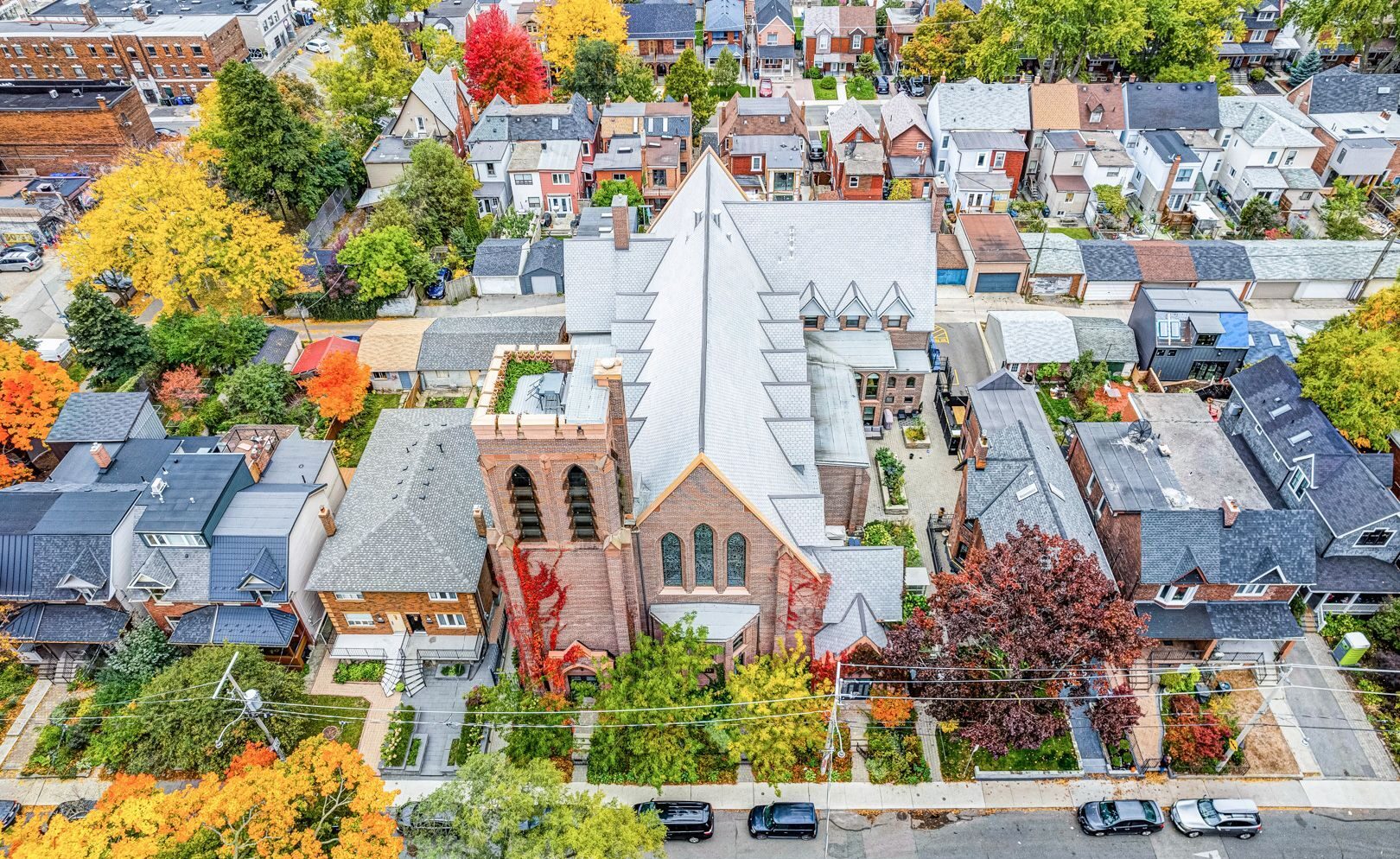
A church loft conversion is a residential redevelopment of a former church building or church-owned land. In Toronto, most projects preserve the original structure—think brick facades, towers, stained glass, and soaring ceilings—while introducing modern residential units inside.
Well-known examples include The Church Lofts, Abbey Lofts, Glebe Lofts, and Saint Leslieville Church Lofts, each taking a slightly different approach depending on the building’s age, layout, and heritage status.
No two church loft projects are identical—and that’s very much the point.
Are Church Lofts Condos or Freehold?
Most church loft conversions in Toronto are condominiums, governed by a condo corporation with shared responsibility for common elements like roofs, windows, masonry, and mechanical systems.
Smaller condo corporations are common in church conversions, which can mean:
- More direct owner involvement
- Fewer amenities
- Decisions that feel more personal (for better or worse)
Are Church Lofts Harder to Finance?
In most cases, no—but they do reward experience.
Most major lenders will finance church loft condos without hesitation. Where things can slow down is during the appraisal stage, simply because truly comparable sales are harder to find.
Buildings like Macpherson Church Lofts, College Street United Church Lofts, and West 40 Lofts tend to appraise more smoothly thanks to established resale histories. The key variable isn’t the building—it’s having professionals who understand loft-specific lending and valuation.

Why Are Condo Fees Sometimes Higher in Church Lofts?
Church lofts often cost more to maintain than newer builds—and that’s usually intentional.
Older roofs, original masonry, and specialty elements like stained glass require ongoing care. With fewer units sharing fixed costs, expenses can feel more concentrated.
In well-managed buildings, higher fees often reflect proactive reserve planning rather than mismanagement. In heritage properties, maintenance isn’t optional—it’s preservation.
What Heritage Restrictions Apply to Owners?
Many church lofts fall under heritage designation, which usually focuses on protecting exterior elements such as facades, towers, and windows.
Inside your unit, restrictions are often far more flexible—but condo rules may still limit what you can alter. Original beams, window openings, or structural elements may be protected, even if they’re inside your suite.
In practical terms:
- Cosmetic renovations are usually fine
- Structural or window changes often require approval
- Exterior alterations are typically off-limits
Are Church Lofts Dark, Cold, or Noisy?
It depends entirely on the unit.
Some suites enjoy dramatic arched windows and multiple exposures, while others rely on clerestory windows or preserved stained glass.
Acoustics and temperature are similarly individual. High ceilings can amplify sound, but modern HVAC retrofits usually perform well. In church lofts, seeing the space matters far more than reading the specs.
Why Are Unit Sizes and Layouts So Inconsistent?
Because churches were never designed to be divided into neat rectangles.
Expect mezzanines, split levels, angled walls, and dramatic ceiling height changes. Buyers tend to price church lofts based on volume, light, and architectural moments—not just the number on a floor plan.
Can You Rent Out or Airbnb a Church Loft?
Long-term rentals are generally permitted, subject to standard condo rules and Toronto’s rent control guidelines.
Short-term rentals are a different story. Many church loft condos restrict or prohibit Airbnb-style use outright, and City of Toronto regulations apply regardless of building rules.
If rental flexibility matters to you, it’s critical to review the condo bylaws before buying.
Do Church Lofts Hold Their Value?
Church lofts tend to attract a smaller but highly motivated buyer pool. These aren’t impulse purchases.
Because supply is extremely limited and new conversions are rare, well-located church lofts often hold their value well over time. Buildings like The Church Lofts, Saint Leslieville Church Lofts, and Macpherson Church Lofts consistently draw interest when units come to market.
Liquidity can be slower—but demand is usually very real.
What Neighbourhoods Have the Most Church Loft Conversions?
Church lofts are scattered across the city, with higher concentrations in:
- The West End (Bloordale, Dovercourt, Junction-adjacent areas)
- Leslieville and the East End
- Older downtown neighbourhoods with established church infrastructure
Each area reflects a different era of Toronto’s development—and a different style of conversion.
Who Should (and Shouldn’t) Buy a Church Loft?
Church lofts are ideal for buyers who:
- Value character over uniformity
- Appreciate architectural history
- Plan to stay for more than a quick flip
They may not be ideal if you need:
- Predictable layouts
- Extensive amenities
- Easy short-term resale

Ready to Explore Church Lofts in Toronto?
If you’re curious what’s currently available—or want insight into a specific building—we’re happy to help.
View all church lofts for sale in Toronto
-
107 152 Annette Street in Toronto: Junction Area Condo Apartment for sale (Toronto W02) : MLS®# W13703326
107 152 Annette Street Toronto M6P 1P4  $689,900Residential Condo & Other
- Status:
- Active
- MLS® Num:
- W13703326
- Bedrooms:
- 2
- Bathrooms:
- 1
Award winning Victoria Lofts transformed a 19th Century Church and Schoolhouse (formerly the Victoria Royce Presbyterian Church) into one of our city's most desired addresses at 152 Annette white maintaining it's original heritage architecture and integrity. Sought after yet rarely offered, this 825 SF 1 bedroom + den features soaring ceilings of more than 10' throughout the principal living areas, large windows with lots of light and exposed duct work in an open concept hard loft with an 153 SF terrace ideal for a quiet city escape. Stainless steel appliances and a generous kitchen island afford lots of space for prepping your next great meal. As well, the terrace features a gas line hookup for BBQ and Summer dining. The grounds are well maintained with lush landscaping. Upgrades include new flooring and appliances. A block away, the Junction neighbourhood offers, a one stop destination for groceries, dining, antiques, clothing and much more. With highlights such as the Sweet Potato grocery store, Bothams restaurant, Coal Miner's Daughter womenswear and Mrs. Huizinga's antiques. A short walk south takes you to High Park, Toronto's largest park with tennis courts, pools and the famous blooming cherry blossoms each spring. Easy access to transit and a near perfect walk score. This is a hidden gem perfect for the discerning eye that holds value well beyond it's price. More detailsListed by BAKER REAL ESTATE INCORPORATED- MARK SAVEL
- SAGE REAL ESTATE LTD., BROKERAGE
- 1 (647) 2916328
- Contact by Email
-
408 456 COLLEGE Street in Toronto: Palmerston-Little Italy Condo Apartment for sale (Toronto C01) : MLS®# C13752416
408 456 COLLEGE Street Toronto M6G 4A3
$689,000Residential Condo & Other- Status:
- Active
- MLS® Num:
- C13752416
- Bedrooms:
- 2
- Bathrooms:
- 1
Holy character! Anchored by a restored 1884 Gothic Revival church tower, this boutique residence brings heritage charm to the heart of Palmerston and Little Italy. Inside, 721 square feet of bright, west facing living space delivers a functional layout with plenty of storage throughout. The spacious bedroom easily fits a king size bed and features a walk in closet, while the versatile den can serve as a private office or be converted into a second bedroom. Enjoy beautiful afternoon light, one parking space and one locker, both conveniently located on P2. Building amenities include a rooftop terrace with skyline views, fitness centre, sauna and party room. Steps from incredible restaurants, cafés, Kensington Market, U of T, parks, groceries and the 24 hour College and Bathurst streetcars. A home with smart space, sunshine and some serious architectural soul! More detailsListed by SAGE REAL ESTATE LIMITED- MARK SAVEL
- SAGE REAL ESTATE LTD., BROKERAGE
- 1 (647) 2916328
- Contact by Email
-
306 456 College Street in Toronto: Palmerston-Little Italy Condo Apartment for sale (Toronto C01) : MLS®# C13671416
306 456 College Street Toronto M6G 4A3
$680,000Residential Condo & Other- Status:
- Active
- MLS® Num:
- C13671416
- Bedrooms:
- 1
- Bathrooms:
- 2
Tucked inside the iconic Channel Club, a boutique residence built around a restored 1880s church tower, this rarely offered one-bedroom offers the kind of space that's increasingly hard to find in the city. With over 860 sq. ft., the generous layout provides endless flexibility to create dedicated living, dining and work-from-home spaces without compromise. A bright west exposure fills the suite with natural light while offering a peaceful retreat from the energy just outside your door. Set at the intersection of College and Bathurst, you're steps from some of Toronto's best restaurants, cafés and neighbourhood favourites, with Kensington Market, Little Portugal and Trinity Bellwoods all within easy reach. FreshCo, Shoppers Drug Mart, TTC streetcars and everyday conveniences are just outside, making day-to-day living effortless. Boutique building amenities include a fitness facility and rooftop terrace, completing the perfect balance of vibrant city living and a place to truly unwind at the end of the day. More detailsListed by PROPERTY.CA INC.- MARK SAVEL
- SAGE REAL ESTATE LTD., BROKERAGE
- 1 (647) 2916328
- Contact by Email
-
512 456 College Street in Toronto: Palmerston-Little Italy Condo Apartment for sale (Toronto C01) : MLS®# C13781888
512 456 College Street Toronto M6G 4A3
$549,000Residential Condo & Other- Status:
- Active
- MLS® Num:
- C13781888
- Bedrooms:
- 2
- Bathrooms:
- 1
Spacious & Bright West-Facing Condo with Exceptional Flexibility! This Bright, Generously sized Condo with a Desirable West Quiet Exposure and One Owned underground Parking Spot!!! The Spacious layout offers Comfortable principal rooms and hardwood floors throughout, creating a warm and inviting feel. The Kitchen features Stainless steel appliances and Stone countertops, offering plenty of space for cooking and entertaining. The Exceptionally Large Primary Bedroom easily accommodates a King-sized bed, large Walk-in Closet, with the Added Convenience of Semi-ensuite access to the Oversized Bathroom. A Spacious Den with Floor to Ceiling windows and Wall Bookcase provides an Ideal Home Office, Study or Family room and offers the Flexibility to be converted to a Second Bedroom. The Oversized Bathroom provides Excellent Functionality and Generous Space. The rare Underground Parking adds Valuable convenience. Great storage in the unit and a separate Storage Locker which is owned. A Wonderful Opportunity for buyers looking for More Space, Flexibility and Functionality than the typical condo, in a Bright West-facing suite with Tremendous potential. Set in Highly sought-after Little Italy, enjoy plenty of fabulous Shops & Restaurants. Ideal for Professional minutes to Hospital Row, U of T, High Walking Score & TTC at your doorstep! More detailsListed by RE/MAX REALTRON REALTY INC.- MARK SAVEL
- SAGE REAL ESTATE LTD., BROKERAGE
- 1 (647) 2916328
- Contact by Email
-
415 456 College Street in Toronto: Palmerston-Little Italy Condo Apartment for sale (Toronto C01) : MLS®# C13740796
415 456 College Street Toronto M6G 4A3
$499,000Residential Condo & Other- Status:
- Active
- MLS® Num:
- C13740796
- Bedrooms:
- 2
- Bathrooms:
- 1
Welcome to the heart of Little Italy, This bright and spacious 2-bedroom suite offers approximately 700 sq. ft. in a well-maintained, character-filled building, surrounded by some of Toronto's best restaurants, cafés, nightlife, festivals and neighbourhood energy - all with an incredible 100 Walk Score.Freshly painted and move-in ready, the suite features brand-new appliances, new countertops and plenty of natural light. Wake up to CN Tower views from the bedroom, then step outside and experience one of the city's most vibrant communities. You're moments from the College and Spadina streetcars, U of T, Kensington Market and the Annex, with downtown just minutes away.The building offers a gym and rooftop terrace, plus the unit has access to guaranteed rental parking for only $100/month - an increasingly rare convenience downtown.Two real bedrooms, great light, skyline views and an unbeatable Little Italy location. With so few condo options in this neighbourhood, this is a rare opportunity to own a true downtown home without sacrificing space, character or walkability. Building features Sauna, Gym and Rooftop Terrace. More detailsListed by ROYAL LEPAGE SIGNATURE REALTY- MARK SAVEL
- SAGE REAL ESTATE LTD., BROKERAGE
- 1 (647) 2916328
- Contact by Email
-
806 456 College Street in Toronto: Palmerston-Little Italy Condo Apartment for sale (Toronto C01) : MLS®# C13748808
806 456 College Street Toronto M6G 4A3
$299,000Residential Condo & Other- Status:
- Active
- MLS® Num:
- C13748808
- Bathrooms:
- 1
Facing the inner street, Rarely offered Tranquil Penthouse at The Channel Club, an 8-storey boutique residence completed in 1990, thoughtfully incorporating a historic Gothic Revival tower. This distinctive suite features unobstructed city views! A beautifully mantled wood-burning fireplace with screen. Ideally situated between vibrant Little Italy and the Annex, offering the perfect blend of urban convenience, historic character and timeless elegance. 3 big closets! Completely renovated in August 2026 with a sophisticated, modern finish, featuring granite countertops and backsplash, brand-new stainless steel appliances including SAMSUNG (refrigerator, stove, dishwasher) and range hood, plus a brand-new stacked GE washer and dryer. A rare opportunity to enjoy contemporary comfort within a building rich in history and character. Immaculate conditions. Turn key and move in! More detailsListed by RE/MAX REALTRON REALTY INC.- MARK SAVEL
- SAGE REAL ESTATE LTD., BROKERAGE
- 1 (647) 2916328
- Contact by Email

Or reach out for building-specific advice, resale history, and off-market opportunities.


