


Why Sold Prices Matter More Than List Prices in Toronto
In Toronto, list prices are often more of a strategy than a statement of value. Homes may be priced deliberately low to attract multiple offers, or ambitiously high to test the market. Either way, the number that ultimately matters is what a property actually sells for. That final sale price is where expectations meet reality — and it’s the benchmark buyers and sellers should be paying attention to.
For buyers, sold prices provide grounding. They reveal what the market is willing to pay, not what sellers are hoping for. For sellers, they form the backbone of accurate pricing decisions, helping avoid the costly mistake of overshooting and sitting stale. In a city where timing, competition, and micro‑neighbourhood dynamics matter, sold data isn’t just helpful — it’s essential.
That said, not all sold-price information is created equal. Understanding where the data comes from (and its limitations) is just as important as the numbers themselves.
Realtor.ca — The Foundation of Toronto Real Estate Data

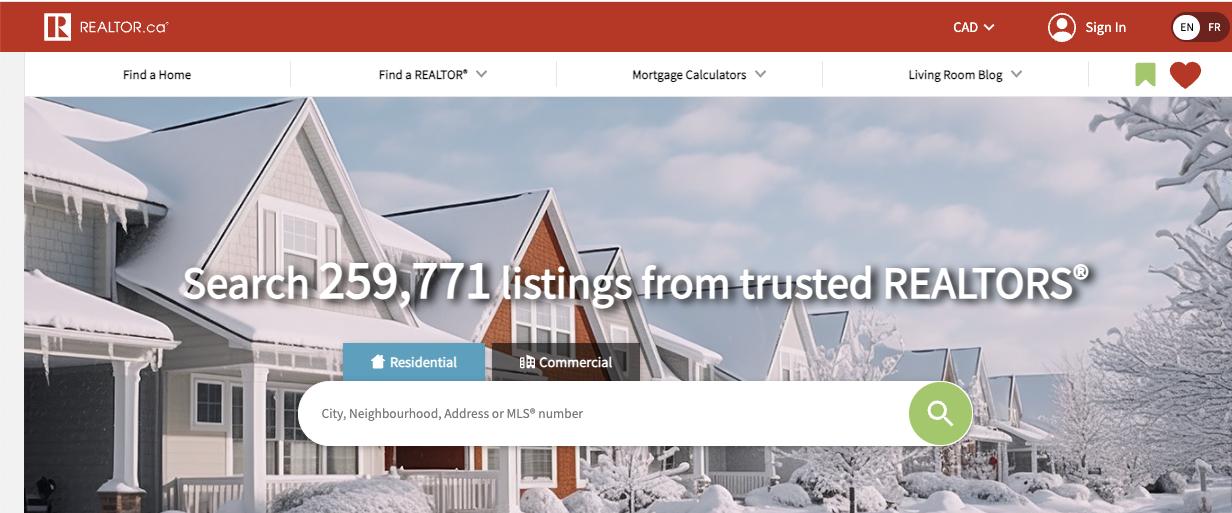
If there’s one place every Toronto home search begins, it’s Realtor.ca. This is the official public-facing platform of Canada’s MLS system, and it’s where active real estate listings are first published and syndicated. Nearly every legitimate listing you see online starts here before appearing elsewhere.
What Realtor.ca does exceptionally well is provide consistent, up-to-date listing information straight from the MLS. What it does not do in Ontario, however, is display sold prices publicly. That’s an important distinction — and the reason so many third-party websites exist.
Those other platforms aren’t replacing Realtor.ca. They’re building on top of it, pulling in listing data as their foundation and then layering on historical sales, analytics, and estimates once transactions close. Understanding this hierarchy helps set expectations for accuracy and timing.
How Third-Party Websites Show Sold Prices (And Why Results Differ)
After a property sells, details eventually become part of the MLS record. Third-party websites access this information in different ways, at different speeds, and with different presentation styles. Some update quickly. Others lag. Some prioritize visuals and charts, while others focus on simplicity.
This is why you may see a sold price on one website but not another — or see slightly different numbers across platforms. Timing, data refresh cycles, and how sales are interpreted all play a role. None of this means the data is intentionally misleading; it simply reflects how complex real estate reporting can be.
The key takeaway: these platforms are tools, not official records. They’re incredibly useful, but they’re not infallible.
About “Estimated” Sold Prices — Helpful, But Handle With Care
Some websites go a step further by publishing estimated sold prices before a sale is officially confirmed. These estimates are typically generated using algorithms that analyze comparable properties, historical trends, and nearby sales activity.
In uniform neighbourhoods with consistent housing stock, estimates can be directionally helpful. They may give buyers and sellers an early sense of where a sale likely landed. But in Toronto — a city full of unique homes, renovations, loft conversions, and one-off transactions — estimates can miss the mark.
Renovation quality, seller concessions, urgency, and even closing terms can all meaningfully affect a final price. Algorithms can’t see those details. That’s why estimated prices should always be treated as a starting point, never a conclusion.
The Best Websites to Research Sold Prices in Toronto
HouseSigma

HouseSigma is one of the most widely used platforms for researching sold prices in Toronto. It offers historical sales data, neighbourhood trends, and visual charts that make it easy to explore how prices have moved over time.
It’s particularly useful for buyers who want to dig into past sales activity and get a sense of momentum. However, HouseSigma also displays estimated sold prices in some cases, which should be approached cautiously — especially for unique or heavily renovated properties.
Best used as a research companion, not a final authority.
Zoocasa

Zoocasa provides a clean, user-friendly interface with solid coverage of sold listings across Toronto. It tends to focus more on confirmed sales rather than heavy predictive overlays, making it a good option for straightforward checks.
While it may not offer the same depth of analytics as some competitors, its simplicity is often a strength. It’s especially helpful for quick validation when cross-referencing multiple sources.
Zolo

Zolo is another reliable option for browsing sold homes in Toronto. It offers clear filters and a straightforward presentation of recent sales, making it easy to see what’s happening in a specific area.
It works well as a secondary verification tool, particularly when you want to confirm whether a sale has been broadly reported across platforms.
Property.ca

Property is especially popular among condo buyers, thanks to its building-level insights and downtown focus. For those researching specific condo developments, it can provide helpful historical context.
That said, sold-price accuracy can vary building by building, and estimates should be treated with care. It’s a strong niche resource, but not a complete market picture on its own.
Strata

Strata combines brokerage-level insights with consumer-facing tools, offering sold data alongside market commentary. Its approach can feel more curated, which some users appreciate.
Like all third-party platforms, it’s best used in conjunction with others — particularly when pricing decisions are involved.
Why Online Sold Prices Still Don’t Tell the Full Story
Even when sold prices are accurate, they rarely tell you why a home sold for what it did. Condition, layout, upgrades, competition, timing, and negotiation dynamics all matter — and none of those show up neatly in a data table.
Two homes can sell for the same price and represent completely different outcomes. Without context, it’s easy to draw the wrong conclusions.
How We Use Sold Data When Advising Buyers and Sellers
When we analyze sold prices, we don’t look at them in isolation. We compare similar homes, adjust for condition and timing, and consider the broader market environment. Data is the foundation — but interpretation is what turns information into insight.
That’s especially important in Toronto, where small differences can have big pricing implications.
Final Thoughts: Use the Tools — But Know Their Limits
Realtor.ca remains the foundation of Toronto’s real estate ecosystem. The other platforms add layers of insight, convenience, and accessibility — but they’re still just tools.
Used thoughtfully, sold-price websites can help you ask better questions and spot meaningful trends. Used blindly, they can create false confidence. The difference lies in understanding both what the data shows — and what it doesn’t.
If you’re trying to understand what homes are actually selling for in your neighbourhood, and what that means for your next move, we’re always happy to help interpret the numbers – drop us a note below!


