As a lifelong resident of the city, home has always been in midtown Toronto. In creating TorontoLivings, I wanted a place to share my experiences in the city, to educate our clients on the ever-changing market, and show people a side of the City that most don’t see every day.
For buyers in Toronto, closing day isn’t just the day you get your keys—it’s the official transfer of ownership, money, and responsibility. From final signatures to title registration, a lot happens behind the scenes. We’re here to make sure none of it feels overwhelming.
Coordinated Team Effort: Lawyers, Mortgage Brokers & More
Our job doesn’t end once the deal is signed. Long before closing day, we help align all parties involved:
Lawyers receive the Agreement of Purchase and Sale, your ID, and mortgage instructions so they can prepare legal documents.
Mortgage brokers ensure your financing is locked in, and funds are ready to be wired or drafted.
Insurance providers issue home insurance and, if required, title insurance.
We make sure everyone—from your lender to your lawyer—is speaking the same language and working on the same timeline.
Buyer Prep: What You’ll Need Before Closing Day
We walk our buyers through a pre-closing checklist to avoid last-minute scrambles:
Schedule a final walk-through to confirm the property is in agreed-upon condition
Arrange utilities transfer for water, gas, and electricity
Secure home insurance and send proof to your lawyer
Obtain a bank draft or arrange a wire transfer for your remaining down payment and closing costs
We also remind clients to keep ID handy and accessible, as lawyers will require two valid forms.
On Closing Day: How We Guide You
On the big day, your lawyer receives the funds from your lender and coordinates title transfer with the seller’s lawyer. Once that’s done, title is officially registered in your name.
Behind the scenes, we’re checking in with your lawyer and mortgage broker throughout the day to confirm:
Money is transferred and received
Title is registered with no red flags
Keys are released for pickup (usually via lockbox or lawyer’s office)
If something goes sideways—delays, missing documents, wire issues—we’re the ones making the calls and pushing things forward.
Post-Closing Support: What Happens After You Get the Keys
After closing, we don’t disappear. Our post-closing support includes:
Key pickup help (especially for out-of-town buyers)
Advice on movers and elevator booking if it’s a condo
Homeownership checklist: Test appliances, check mail delivery, register warranties
30-day check-in: If questions come up, we’re still in your corner
Why Our Process Makes a Difference
When buyers tell us closing day was “shockingly smooth,” we take it as the highest compliment. That’s the result of constant coordination, thoughtful reminders, and knowing who to call when things get bumpy.
Whether it’s your first home or your fifth, our team is committed to making sure you walk into your new place feeling confident—and not carrying chaos.
In Toronto’s ever-evolving market, winning an offer isn’t always about throwing down the biggest number. It’s about knowing the playing field — and showing up ready. That’s where we come in. From the first discovery call to offer night, we prep our buyers to write strong, thoughtful offers that give them the edge — whether the home’s been on the market five days or five months.
Getting the Numbers Right: Price Strategy
Coming up with the right offer price is both an art and a science. We help our buyers:
Analyze comparable sales (not just list prices)
Understand the seller’s motivation (vacant, tenanted, power of sale, etc.)
Distinguish between market value and emotional value
Sometimes, winning means going over asking. Other times, it means standing firm with confidence. Like that time our client landed a downtown condo under asking — because we knew it was overpriced and sat on the market too long. Right data, right result.
The Deposit: Show You’re Serious
A solid deposit sends a message: you’re committed. In Toronto, that usually means 5% of the purchase price, delivered within 24 hours of acceptance (or with the offer, in competitive cases).
We advise our buyers to:
Have certified funds or a bank draft ready
Know the seller’s expectations in advance
Be prepared to act fast — speed matters
Planning to offer on a weekend? Line up the deposit before Friday.
Conditions aren’t just fine print — they’re your safety net. We help tailor each offer to balance protection and appeal. Here are some we commonly include:
Representations and warranties on key features (roof, HVAC, etc.)
These clauses protect your future and keep everyone honest.
Final Prep: What to Have Ready Before Offer Night
Before we even draft your offer, we make sure you’ve got:
Pre-approval letter from your lender
Deposit funds in-hand (or in reach)
ID and legal contacts sorted
A clear sense of your maximum budget and emotional walkaway point
We prep not just the paperwork — but the mindset. Because sometimes, walking away is the power move.
Let’s Make Your Offer Stand Out
Every offer we write is customized to the property, the seller, and most importantly — you. Whether it’s your first home or your forever one, we’re here to make sure your offer is the one that gets the yes.
Thinking of buying? Let’s talk strategy — and make sure you’re ready when the right home hits the market.
Every showing should bring you closer to the right home—not just burn another hour in traffic. That’s why our approach to touring is strategic from the jump. We don’t line up a dozen random listings just to fill a Saturday. Instead, we work backwards from your wishlist, your must-haves, and your budget to ensure each home we view is worth your time.
We also make sure the properties we tour are financially realistic. That means no homes $100K over budget “just to compare.” If it doesn’t make sense on paper, it won’t be on the schedule. Our buyers appreciate that we protect their energy and momentum. Especially in fast-moving markets, clarity is everything.
Price is only part of the puzzle. We look beyond the numbers to find homes that match your lifestyle, needs, and future plans. That might mean:
A walkable neighbourhood near your office or daycare
Extra space for a growing family or home office
A building with solid financials and a healthy reserve fund
We combine your personal criteria with on-the-ground data to narrow down the best matches. That includes:
Reviewing neighbourhood sales activity
Flagging listings with strong potential or red flags
Applying insider insight from past showings, inspections, and renovations we’ve seen
Sometimes a property looks great online but tells a different story in person. Our job is to filter out the noise and surface the listings that check the right boxes. Think of us as your real estate matchmakers—we’re not swiping on just anything.
On Tour: What Our Showings Actually Look Like
Whether we’re walking through a detached home, a stacked town, or a downtown loft, our goal is the same: to get a clear, realistic sense of the property’s strengths and any possible dealbreakers. Touring condos comes with its own checklist—we look closely at the building’s condition, the amenities, hallway and elevator wear, and even the friendliness of front desk staff. We also review maintenance fees and ask key questions about what’s included.
When you tour with us, it’s not a passive walk-through. It’s a working session. We’ll be pointing out things like:
Sloping floors or wall cracks (signs of structural issues)
Electrical or plumbing inconsistencies
Whether renovations were likely done without permits
What to expect in terms of potential costs or maintenance
We aim to balance honest feedback with opportunity spotting. For example, we once toured a home where a wall had clearly been removed, but there were no permits filed with the city. That detail saved our client from a risky purchase—and that’s exactly the kind of diligence we bring to every tour.
On the flip side, we’ve also walked into overlooked listings that turned out to be diamonds in the rough. A place with dated finishes but good bones, or a listing that sat too long on the market due to poor staging. We help you see past surface-level distractions to uncover value.
Touring Like a Pro—How to Prepare
Touring multiple homes in a day? It can feel like a marathon. Here are some smart tips to make the process smoother:
Wear easy-off shoes (you’ll be taking them off a lot!)
Pack a light snack and water—especially on multi-stop tours
Bring your phone for notes and photos
Dress in layers—Toronto weather can flip fast, and so can indoor temps
Charge your phone beforehand—you’ll want a full battery for maps, notes, and photos
Let’s Make the Most of Your Time
Our goal? To make every showing count. Touring with us means getting expert insights, clear feedback, and the confidence to know whether a home is right—or not worth the second look. We want you to walk away from a day of showings feeling informed and empowered, not overwhelmed.
We treat your time like it’s our own, and we bring the same energy whether you’re seeing your first place or your forever home.
Choosing a neighbourhood is more important than choosing a house.
Sounds bold, but we mean it. You can renovate a kitchen—changing your neighbours, commute, or school zone? Not so easy.
That’s why our approach to neighbourhood matchmaking is part art, part algorithm, and entirely personal. Here’s how we help Toronto buyers zero in on a community that fits like a glove.
Step 1: Discover Your Lifestyle Profile
Toronto isn’t a one-size-fits-all city. It’s a mosaic of micro‑neighbourhoods, each with its own rhythm. So we start with the big question:
Who are you—and what kind of daily life do you want?
Some common profiles:
Family-focused: You’re after schools, playgrounds, and quiet streets. Think Leaside, The Beaches, or Leslieville.
Urban professionals: You want transit, restaurants, and culture at your doorstep. King West, Liberty Village, or the Annex might be your match.
Creative & social: You crave character homes, indie coffee, and a local art scene. Hello, Cabbagetown, Ossington, or Roncesvalles.
We talk about lifestyle first so that budget and bedrooms don’t blindside what really matters: how you want to live.
Step 2: Set Your Priorities (And Rank Them!)
Everyone says “location matters,” but what in the location actually matters to you?
We guide you through a priority ladder:
Transit & commute: Do you need a short subway ride to work—or will you be working from home with the occasional GO train?
Schools & parks: If you have kids (or plan to), we’ll walk you through top-performing school zones and family-friendly pockets.
Culture & community: Love farmer’s markets? Prefer quiet, tree-lined streets? Crave restaurant row? We take it all into account.
No one neighbourhood wins on everything. But by identifying your top 2–3 must-haves, we can narrow the field.
Step 3: Match Housing Type to Budget
Let’s talk real estate realities. Toronto’s housing inventory is diverse—but so are the price tags.
Condos & Lofts: Most common in Liberty Village, Downtown Core, or along the waterfront.
Semis & Townhomes: You’ll find these sprinkled through Leslieville, Dufferin Grove, and Danforth East.
Detached & Luxury: If character homes or top-tier finishes are on your list, think Forest Hill, The Annex, or Rosedale.
Real Life Situation: A first-time buyer looking for a modern 1-bed near nightlife might land in Liberty Village. A growing family? They may stretch to East York or Davisville for more space and schools.
Step 4: Future-Proof Your Move
Real estate isn’t just about today. It’s also about where a neighbourhood is heading. We help you evaluate:
Upcoming infrastructure: Like the Ontario Line or new transit hubs.
Local development plans: Is that quiet street about to get a new condo tower?
Resale & rental outlook: Are you planting roots—or thinking investment?
By factoring in long-term trajectory, we match you with neighbourhoods that make sense today and tomorrow.
Real Clients, Real Matches
Here’s how it plays out in real life:
Alex & Priya were busy professionals who wanted walkability, nightlife, and a short commute. We placed them in a 1+den in Liberty Village—close to restaurants, the GO station, and their spin studio.
The Bains family had a toddler and another on the way. School rankings and parks were non-negotiable. After a few tours, Leaside won out for its kid-friendly vibe, top public schools, and backyard potential.
Margaret, an empty-nester downsizing from North York, wanted charm, character, and a strong sense of community. She’s now happily settled in a Victorian in Cabbagetown, within walking distance of Riverdale Farm.
How Our Matchmaking Works
Here’s our typical process:
Discovery Call– You tell us your lifestyle, goals, and wishlist.
Neighbourhood Shortlist – We build a curated list based on our deep Toronto knowledge.
Tour Time – We show you homes and hoods side-by-side.
Refine & Decide – We adjust based on what feels right in person.
It’s not just about real estate. It’s about real life.
Let’s Find Your Fit
The right home starts with the right neighbourhood. We’ll help you explore, compare, and commit with confidence.
Your next chapter starts with a map—and we know it by heart.
Getting a mortgage might not be the most exciting part of buying a home in Toronto—but it is one of the most important. A solid mortgage plan gives you clarity, confidence, and a serious leg up when it’s time to make an offer.
At Toronto Livings, we make sure our buyers don’t go in blind. That means connecting you early with trusted mortgage professionals, mapping out a realistic budget, locking in your pre-approval, and exploring all financing options that might be available to you. Here’s how the process works, and how we help every step of the way.
Why Mortgage Prep Comes Before the House Hunt
In Toronto’s competitive market, sellers want to know you’re serious—and that starts with having a pre-approval in hand. Beyond that, knowing what you can really afford (versus what a lender might approve you for) protects you from overextending and sets you up for long-term success.
It also helps narrow your home search from the start. With a clear understanding of your budget, you can focus your energy on properties that are actually within reach—saving time, emotional energy, and potential disappointment.
Our job doesn’t end at the introduction. We stay in touch with both you and your mortgage advisor throughout the process to make sure everything stays aligned with your purchase timeline.
Mortgage Broker vs. Bank: What’s the Difference?
Mortgage brokers shop your application across multiple lenders, including banks, credit unions, and private lenders. That often means better flexibility or terms. Bank mortgage specialists, on the other hand, work with a single institution—which can be convenient if you already bank there. We’ll help you weigh which is the better fit.
Sometimes, our buyers will get pre-approvals from both—just to compare their options and feel confident in their decision.
Step 2 – Know Your Real Budget
Affordability Isn’t Just the Pre-Approval Number
Just because you’re approved for $850,000 doesn’t mean you should spend it. Lenders use ratios like GDS (Gross Debt Service) and TDS (Total Debt Service) to set thresholds, but lifestyle factors matter too. If you’re juggling daycare, car payments, or freelance income, your “real” comfort zone might look different.
We always ask our buyers: What monthly payment feels comfortable? Then we reverse-engineer your price range based on that number—not just the maximum approval.
Factor in Closing Costs and Hidden Expenses
Don’t forget the one-time costs: Toronto’s double land transfer tax, legal fees, title insurance, home inspection, moving expenses… it adds up quickly. We’ll help you estimate these ahead of time so you’re not caught off guard.
Depending on your situation, you might also want to budget for:
CMHC insurance premiums (if putting down less than 20%)
Condo reserve contributions
Immediate renos or furniture purchases
Having a cushion for these extras can make your first year of homeownership far less stressful.
Step 3 – Lock In Your Pre-Approval
What You’ll Need to Provide
Getting pre-approved usually takes a few days, provided you have your docs ready. Here’s a checklist of what most mortgage brokers or lenders will ask for:
Identification
Government-issued photo ID (driver’s license, passport, etc.)
Proof of Income
Recent pay stubs (usually the last two)
A current employment letter stating salary, role, and duration of employment
If self-employed: last 2 years of Notices of Assessment, T1 Generals, and business financials
Proof of Down Payment
Bank statements showing savings
Gift letter if funds are coming from a family member
Investment or RRSP account statements if applicable
Credit Information
Authorization for the lender to pull your credit score
Details of any outstanding loans, credit cards, or lines of credit
Monthly Obligations
Documentation for car loans, student loans, or other recurring debts
Child support or alimony obligations (if applicable)
Gathering these in advance makes your mortgage application smoother—and shows sellers you’re serious.
What a Pre-Approval Actually Means
A pre-approval confirms how much you’re eligible to borrow and can lock in an interest rate for 90–120 days. It isn’t a final approval—but it shows sellers you’re ready to go. And that can make the difference in a multiple-offer situation.
It’s also an excellent gut-check. If the numbers feel tight, we can step back and revisit your strategy before you fall in love with a property that pushes your limits.
Step 4 – Explore Your Financing Options
Insured vs. Uninsured Mortgages
If your down payment is under 20%, your mortgage will need to be insured (usually through CMHC), which adds a premium but allows for lower upfront costs. If you have 20% or more, you avoid the insurance fee—and often get access to better terms.
Each path has pros and cons. We’ll walk you through both so you can decide what works best for your long-term plans.
First-Time Buyer Incentives
If you’re a first-time buyer, don’t overlook programs like the RRSP Home Buyers’ Plan or the First-Time Home Buyer Incentive. These can help stretch your budget, but they come with fine print—we’ll help you understand it.
We’ll also flag less-talked-about programs like land transfer tax rebates and municipal grants when they apply.
What If You’re Buying Before Selling?
If you’re purchasing a new home before your current one sells, you may need bridge financing or a home equity line of credit (HELOC) to make the gap work. We’ll help coordinate with your mortgage pro to keep everything aligned.
Timing matters here—and we’ll build a game plan so you don’t end up juggling two mortgages longer than needed.
How We Make This Easy
We Do the Legwork
From intro calls to follow-ups, we keep you on track and informed. Our goal is to make mortgage prep feel less like a chore and more like a strategic move—because that’s exactly what it is.
We also translate the mortgage lingo, break down the numbers, and advocate for you every step of the way.
Real Buyer Story
Mark once worked with a couple looking in midtown. By connecting them with a mortgage broker early, they discovered a lender willing to count variable freelance income. That pre-approval let us move fast on a listing they loved—and they landed it without overbidding.
They later told us that without that early prep, they probably would’ve hesitated and missed out.
Ready to Get Started?
Mortgage prep isn’t just a checkbox—it’s your foundation. If you’re thinking of buying, let’s talk strategy. We’ll connect you with trusted pros, map out your next steps, and get you ready to buy better. Send us a message below!
Step inside an authentic hard loft and Toronto’s industrial past greets you in the scent of weathered pine, the cool touch of century‑old brick, and the echo of open space beneath timber beams. Fewer than 3 % of the city’s condos qualify as true hard lofts—but every square foot carries the provenance of a factory floor or warehouse aisle. For the full back‑story on how hard and soft lofts differ, visit our Ultimate Guide to Hard & Soft Lofts after this read.
Beyond the brick and beam lies a lifestyle that prizes individuality. No two conversions are identical; ceiling heights change from room to room, rivet‑studded columns interrupt open floor plans, and a century’s worth of paint layers tell stories you’ll never fully uncover. Historic designation protects the exterior shell, but the interiors have become living canvases for architects, artists, and everyday urbanists. If glass towers feel interchangeable, hard lofts are the antidote—stubbornly imperfect and gloriously human.
What Makes a Hard Loft … Hard?
Authentic hard lofts start with bones—post‑and‑beam structures, concrete mushroom columns, and steel‑sash windows—reinforced by heritage bylaws that protect them. Utilities and retrofits can be trickier than in purpose‑built condos; financing quirks abound, and soundproofing is an art form. If you crave the details, the City of Toronto’s Heritage Preservation Services explains why adaptive reuse matters.
Materials that age gracefully – Reclaimed maple, Douglas‑fir, and poured concrete don’t just endure; they accumulate patina and character. Well‑sealed brick regulates humidity, keeping interiors comfortable year‑round.
Volume equals light – Eleven‑to‑seventeen‑foot ceilings paired with warehouse windows invite daylight deep into the suite, reducing reliance on artificial lighting and making plants (and people) thrive.
Modern systems behind historic walls – Most conversions add fan‑coil HVAC, fiber‑optic cabling, and upgraded elevators, but they hide them behind drywall bulkheads so as not to distract from the heritage fabric.
Factory flashback: Built in 1915–16 for the Wm. Wrigley Jr. Company, the Beaux‑Arts gum plant once shipped Spearmint across Canada. Its loading docks now serve as quirky terrace space.
Loft‑living highlights: 14‑foot concrete slabs, steel warehouse windows, raw ducts overhead, and original smoke doors repurposed as sliding room dividers. Units run true live/work, so expect photography studios beside kombucha breweries.
Building perks: Freight‑sized elevators ideal for art installations, secure bike storage, and a communal roof deck with sunrise views over the Port Lands.
Neighbourhood snapshot: Steps to Film Row cafés, Queen East’s gallery strip, and weekend vintage markets at The Leslieville Flea.
Broadview Lofts — 68 Broadview Ave, Riverside
Broadview Lofts — 68 Broadview Ave, Riverside
Factory flashback: Born in 1914 as a Rexall Drug warehouse, later grain storage, before Sorbara Group’s 2006 loft revival.
Loft‑living highlights: Brick‑and‑beam warmth meets glassy penthouse additions; original freight‑elevator doors grace many suites, and clerestory windows usher in golden afternoon light.
Building perks: A dramatic, hotel‑style lobby anchored by a 1900s safe, a rooftop party room with skyline views, and ample guest parking—rare for conversions.
Neighbourhood snapshot: Riverside’s brew‑pub trail, the Broadview Hotel’s rooftop bar, and 24‑hour Queen streetcar service at your front door.
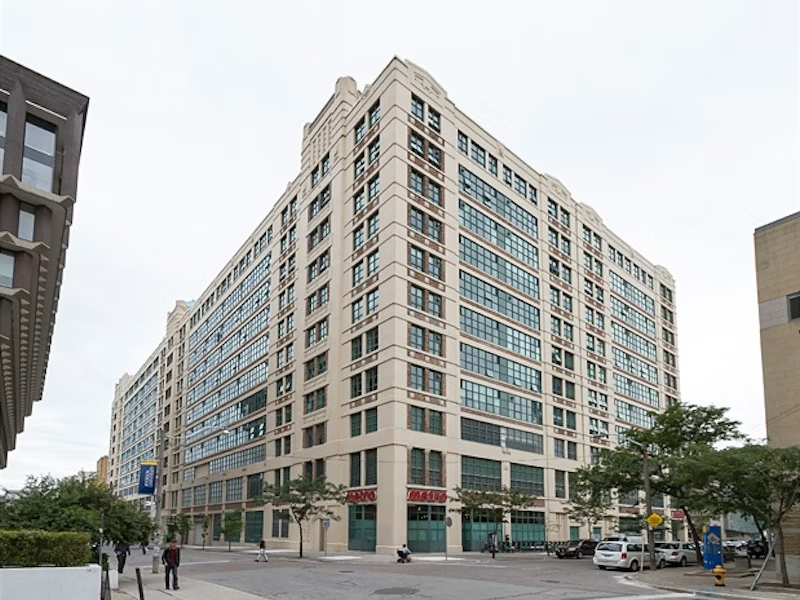
Factory flashback: A Simpson’s—then Sears—catalogue‑warehouse complex from 1910–49, spanning an entire city block and once linked to the Eaton Centre by underground tunnels.
Loft‑living highlights: 480 sprawling suites, mushroom columns, soaring atriums, a rooftop dog run, lap pool, and indoor half‑court basketball—rare amenities for a heritage building.
Building perks: A two‑level Metro grocery store next‑door, 24‑hour concierge, and on‑site dry cleaning—all beneath exposed steel trusses that remind you of the building’s industrial DNA.
Neighbourhood snapshot: Six minutes on foot to the Eaton Centre and Yonge subway, yet sheltered from late‑night noise on a side street lined with heritage facades.
West‑Side Icons
Candy Factory Lofts — 993 Queen St W, Trinity‑Bellwoods
The Candy Factory Lofts
Factory flashback: Three red‑brick warehouses (circa 1907–1930s) once churned out Rockets and Fizzers candy for Ce De Candy Co. Weekly deliveries of powdered sugar left a sweet aroma that residents swear still lingers after rain.
Loft‑living highlights: 12.5‑foot timber ceilings, thick maple floors, exposed sprinkler lines, and Juliet balconies overlooking Trinity Bellwoods Park.
Building perks: A fully equipped gym tucked beneath vaulted rafters, a dog wash station off the side alley, and an intimate lounge that hosts resident art exhibitions.
Neighbourhood snapshot: Queen West’s indie boutiques, Ossington’s dining corridor, Bellwoods drum circles, and nearby 501 streetcar for cross‑town hops.
The Candy Factory Lofts
Toy Factory Lofts — 43 Hanna Ave, Liberty Village
Toy Factory Lofts — 43 Hanna Ave,
Factory flashback: A 1912 paper plant turned Irwin Toy factory, re‑imagined by Lanterra in 2008. Original conveyor‑belt housings became quirky sculptural elements in the lobby.
Loft‑living highlights: Douglas‑fir posts, soaring steel beams, and a mix of authentic brick lofts plus double‑height soft‑loft additions that offer mezzanine sleeping areas.
Building perks: Full‑service concierge, a landscaped roof terrace with barbecue pods, guest suites for visiting friends, and Tesla superchargers in the garage.
Neighbourhood snapshot: Liberty Village’s patio‑packed nightlife, Bentway skating trail, GO/King streetcar links, and Saturday farmers’ markets at Massey Harris Park.
Robert Watson Lofts — 363 & 369 Sorauren Ave, Roncesvalles
Robert Watson Lofts — 363 & 369 Sorauren Ave
Factory flashback: An early‑1900s confectionery plant revived in 2007 with a glass‑and‑steel addition that respectfully riffs on the original massing.
Loft‑living highlights: Century bricks meld with polished concrete; most suites sport Juliet or full terraces overlooking the leafy rail path, and common areas display vintage candy‑making artifacts.
Building perks: A communal courtyard garden scented by lilacs, an indoor bike garage linked to the West Toronto Rail Path, and a pet‑friendly policy that makes dog socials a weekly ritual.
Neighbourhood snapshot: Roncy’s coffee culture, seasonal Polish street festivals, and hip bike lanes speeding you to High Park in under five minutes.
Tip Top Lofts — 637 Lake Shore Blvd W, Waterfront
Factory flashback: Built in 1929 as Tip Top Tailors’ Art‑Deco headquarters—its neon rooftop sign is a city icon and one of the few neon structures protected under heritage bylaws.
Loft‑living highlights: 13‑foot fluted columns, dramatic saw‑tooth windows, lakeside views, and six glass‑and‑steel storeys added in 2002, creating duplex penthouses with private terraces.
Building perks: Concierge service, a well‑equipped gym that faces Lake Ontario, and an internal courtyard shielded from the Lakeshore’s winter winds.
Neighbourhood snapshot: Martin Goodman Trail at your doorstep, a ten‑minute walk to Harbourfront Centre, and instant access to Billy Bishop Airport for weekend getaways.
Foundry Lofts — 1100 Lansdowne Ave, Davenport
Factory flashback: The 1903 Canada Foundry locomotive plant features a grand atrium—once an assembly line—that now serves as a climate‑controlled indoor street for residents.
Loft‑living highlights: A skylit interior courtyard, multi‑level units, original steel trusses overhead, and operable windows larger than many condo balconies.
Building perks: An expansive party space in the former engine‑testing chamber, on‑site micro‑gallery curated by local artists, and dog‑friendly walking paths along the adjacent rail corridor.
Neighbourhood snapshot: Emerging Davenport Village, with new cafés edging the tracks, cycling access to the Green Line park project, and fast bus service to the UP Express.
Side‑by‑Side Loft Cheat Sheet
Loft
Year Built
Conversion
Typical Ceilings
Unit Count
Signature Amenity
Wrigley
1915
1999
14 ft
81
Rooftop deck
Broadview
1914
2006
11–13 ft
166
Heritage‑vaulted lobby
Merchandise
1910–49
1999
12–14 ft
480
Indoor basketball court
Candy Factory
1907–30s
2000
12.5 ft
121
Resident art lounge
Toy Factory
1912
2008
13–17 ft
213
Roof terrace & EV charging
Robert Watson
1900s
2007
11–15 ft
153
Courtyard garden
Tip Top
1929
2002
13 ft
256
Lakeside gym
Foundry
1903
2008
12–15 ft
104
Grand atrium
(Maintenance fees, property taxes, and sale prices vary—contact us for the latest specifics.)
Buying an Authentic Hard Loft in 2025 and Beyond
Financing quirks – Many lenders view heritage lofts as higher‑risk; CMHC premiums can be steeper, and boutique insurers may cap loan‑to‑value. Work with a mortgage broker who has closed on conversions before—lender familiarity smooths underwriting.
Inspections & environmental checks – Older factories can hide asbestos insulation, lead paint, or residual hydrocarbons from industrial use. A specialist inspector with environmental‑site‑assessment experience is worth every dollar.
Mechanical & acoustic upgrades – Conversions often installed fan‑coil HVAC long after the factories closed; ask for service logs and check sound‑transmission‑class (STC) ratings between floors. If you’re eyeing a unit beneath a mezzanine, test echo levels during a walkthrough.
Heritage clauses – Exterior brickwork and window mullions typically fall under conservation rules. Renovate, yes—replace, maybe not without the city’s blessing. Factor approval timelines into your renovation schedule.
Frequently Asked Questions
Are hard lofts a good investment in a softer market? Heritage scarcity shields value better than glass‑tower abundance; appreciation isn’t guaranteed, yet demand usually outstrips supply.
Do heritage rules restrict renovations? Interior updates are generally flexible, but exterior changes—brick repointing, window replacement—require Heritage Preservation approval.
How does condo insurance differ? Lofts often need unit‑owner upgrades to cover exposed brick and timber; premiums run slightly higher, but specialized brokers can help.
Why do maintenance fees vary so widely? Small unit counts mean fewer doors sharing big‑ticket items like roof membranes. Converted factories also face periodic masonry and window‑restoration budgets.
Can I Airbnb my hard loft? Many heritage buildings enforce stricter rules than modern condos. Some ban short‑term rentals entirely to preserve community stability—verify bylaws before you buy.
What’s the resale audience for lofts? Creative professionals, downsizers seeking character, and remote tech workers all flock to lofts. Marketing should highlight provenance and floor‑plan flexibility rather than bedroom count alone.
Toronto’s factories forged everything from chewing gum to locomotives. A century later, their bones still stand strong—only now they cradle light‑filled homes instead of assembly lines. If you’re ready to let an old wall whisper its story to you, let’s tour a loft together. Get in touch with us below —your next chapter might just begin under a timber beam.
Buying a home in Toronto is thrilling—but let’s be honest, it can also feel overwhelming. Between rising prices, shifting neighbourhood trends, and confusing mortgage rules, knowing where to begin is half the battle. That’s why our first step isn’t a property tour. It’s a conversation.
We call it a discovery call. And here’s exactly what you can expect.
What Is a Real Estate Discovery Call?
A discovery call is a 20- to 30-minute chat where we get to know you—your goals, your budget, and what “home” means to you. There’s no paperwork, no pressure, and no strings attached. Think of it as your chance to pick our brains before diving in.
Why We Start with a Call (Not a Showing)
While it might be tempting to jump straight into open houses, we believe in building a smart foundation first. This helps us:
Save you time
Set realistic expectations
Share valuable local insight upfront
When we understand where you’re coming from, we can help you get where you’re going—faster and with fewer surprises.
Here’s What We Cover on the Call
Your Why: Motivation + Timeline
Are you upsizing for a growing family? Relocating for work? Curious about whether now is the right time? Your “why” gives us direction—and helps us customize your path forward.
Budget & Mortgage Status
We’ll walk through your ideal budget and where you stand with financing. Haven’t spoken to a lender yet? No worries—we can refer trusted mortgage pros to help you run the numbers.
Must-Haves vs Nice-to-Haves
This is where we start turning your Pinterest board into a practical checklist. A balcony, parking, ensuite laundry? Great. We’ll help prioritize what matters most, and what might be flexible.
Quick story: One couple came in convinced they wanted a detached home. After chatting, they realized a hard loft was a better fit—and they couldn’t be happier.
Neighbourhood Talk
Which areas are you considering? The Junction? Midtown? East Danforth? We’ll share the real scoop on each—the vibe, price trends, and pros/cons from people who actually live there.
Education on the Market
We’ll give you a snapshot of what’s happening now: how long homes are sitting, where prices are heading, and what trends to watch. No fluff—just honest, up-to-date advice.
From first tour to firm offer, we’ll walk you through the whole process in plain language. Including:
What offer conditions matter
How inspections and deposits work
What to expect at closing
How We Work (and What Happens Next)
We’ll also cover how we represent you: our communication style, negotiating strategies, and what happens after the call. Spoiler: we follow up with a tailored next step email (and it literally covers EVERYTHING), not a generic drip campaign.
What You Don’t Need to Bring
You don’t need your mortgage pre-approval letter. You don’t need a list of listings. And you definitely don’t need to know all the lingo.
All we ask? Bring your questions and your curiosity. We’ll handle the rest.
A Real Story: From First Call to Front Door
One couple we worked with were new to Toronto and unsure where to begin. On the call with Joey, they shared their dream of walkable neighbourhoods, good coffee, and parks for their dog. Fast forward three months: they’re happily settled in a Roncesvalles condo steps from everything they wanted.
It started with one call.
Let’s Talk—No Strings Attached
Whether you’re buying in six weeks or six months, your smartest first move is booking a discovery call. We’ll listen, guide, and help you gain clarity without the sales pressure – leave us a message below!
Looking for more than just a place to live? At Sloane by Fitzrovia, the amenity lineup reads more like a boutique resort than a typical Toronto rental. Nestled just steps from Yorkdale Mall, this purpose-built rental is redefining what renters can (and should) expect from their living experience.
Let’s take a closer look at what life inside Sloane really offers—from poolside lounges and co-working studios to on-site childcare and doggy spas.
Check out a tour we took of the amenity space in the south tower:
Hotel-Level Social & Wellness Spaces
LIDO Infinity Pool & STOA Rooftop Terrace Yes, there’s a rooftop infinity pool—and yes, it’s heated. Whether you’re cooling off in the LIDO pool or lounging with a cocktail on the STOA terrace, the rooftop vibe here is more Miami than Midtown. Cabanas, fire pits, and stunning skyline views make it a go-to spot year-round.
Sloane West and East Tower Terrace and Pool
Private Sauna, Steam & Cold Plunge Wellness isn’t just a buzzword at Sloane—it’s embedded into the building’s design. The spa zone features a private steam room, rinse shower, and cold plunge tub, offering a spa-calibre retreat just an elevator ride away.
Sloane West and East Tower Cold Plunge
REEL Theatre, Karaoke Room & Bowling Alley Residents can host movie nights in the REEL screening room (complete with surround sound), belt out classics in the karaoke lounge, or lace up for strikes at the boutique-style bowling alley. It’s like your own private entertainment district.
Sloane West and East Tower Bowling Alley
Fitness & Sports-Grade Facilities
The Temple Fitness Centre Forget the tiny condo gym. “The Temple” is a full-scale, commercial-grade fitness hub curated by Pure Fitness. With Hammer Strength equipment, a dedicated spin studio, and serene yoga space, this gym caters to both hard-core athletes and weekend warriors.
Sloane West and East Tower Gym
Basketball Court & Sport Simulators If shooting hoops is more your speed, the Raptors-inspired court will be your new happy place. Add to that the interactive sports simulators—golf, soccer, baseball, and more—and you’ve got year-round training without ever leaving the building.
Sloane West and East Tower Basketball Court
Family & Pet‑Friendly Features
Bloomsbury Academy On-Site Finding a rental with childcare is rare. Finding one with a private Montessori program for kids aged 18 months to 6 years? That’s next level. Parents can drop off their children at Bloomsbury Academy and be back in their suite before their coffee cools.
Adventure Zone Playroom Designed with whimsy and wonder, the Adventure Zone gives kids space to explore safely. Think colourful murals, imaginative structures, and soft flooring for worry-free fun.
Sloane East and West Tour Adventure Zone
Beauty for the Beast Pet Spa Sloane doesn’t forget its furry residents. The on-site pet spa offers grooming stations and bathing areas perfect for pampering your pup after a muddy park day.
Private Dog Run Ideal for quick relief breaks or leash-free zoomies, the enclosed dog run is a thoughtful touch that simplifies daily life for pet owners.
Smart, Convenient Everyday Spaces
Co‑Working & Business Lounge With flexible work here to stay, Sloane offers spacious co-working areas that rival any downtown office. Outfitted with ergonomic furniture, private meeting rooms, and high-speed Wi-Fi, these spaces support your hustle—without a commute.
Cleveland Clinic Virtual Healthcare When health concerns arise, residents can instantly connect with licensed professionals through a trusted provider. Whether it’s a cold or a consultation, Cleveland Clinic Canada’s virtual care means expert advice is just a click away.
Amenity Kitchen & 10 DEAN Café-Bar Want to host a dinner party or casual wine night? The fully equipped amenity kitchen is ideal for group meals and celebrations. Or head to 10 DEAN, the in-house café-bar, for craft coffee by day and cocktails by night. It’s a social hub without ever needing to leave the lobby.
Sloane West and East Tower Club House
Everyday Residential Perks
24/7 Concierge, Keyless Entry & Parcel Lockers You’re never left waiting. The full-time concierge team handles everything from guest check-ins to dry cleaning pickups. Keyless entry adds extra security, while smart lockers ensure packages arrive safely—even when you’re not home.
Fast, Free Wi‑Fi Unlike other buildings that offer Wi-Fi as a paid add-on, Sloane includes Rogers-powered connectivity for free—everywhere. Stream, work, or scroll effortlessly in your suite or common areas, with coverage locked in for the next 10 years.
Parking, EV Charging & Maintenance On Call The underground garage includes electric vehicle chargers, ample bike storage, and rapid maintenance services. Whether it’s a leaky faucet or light bulb burnout, the on-site maintenance team handles it before it becomes a headache.
Inside the Suites
Open-concept layouts with engineered flooring and natural light
Kitchens featuring quartz countertops, undermount sinks, and stainless-steel appliances
In-suite washer/dryer setups
Smart home upgrades like Ecobee thermostats
Floor-to-ceiling windows and options for balconies with city views
Additionally, suites are available with accessibility in mind—including barrier-free bathrooms, lowered counters, and Shabbat-friendly layouts with keyless Sabbath mode.
Sloane West and East Tour Unit Example
Community, Culture & Connection
Programming & Events From fitness bootcamps and movie nights to wine tastings and DIY workshops, Fitzrovia curates regular resident events to build connection.
Brand Partnerships Fitzrovia is proudly partnered with the Toronto Raptors and Blue Jays, which translates into exclusive perks, giveaways, and surprise appearances for tenants.
Neighbourhood Perks Being next door to Yorkdale Mall means access to 270+ shops, restaurants, and the TTC. Running errands or grabbing dinner is effortless when everything you need is steps away.
Final Thoughts
Toronto’s rental market is evolving—and Sloane by Fitzrovia is at the forefront. With lifestyle-driven amenities, family- and pet-friendly features, and one of the strongest community vibes in the city, Sloane goes far beyond your typical rental.
It’s not just about where you live. It’s about how you live. Drop us a message below if you’d like to book a private tour!
Buying a home in Toronto isn’t just about square footage or curb appeal—it’s about making sure the bones of the house are solid before you ever write that offer. Over the years, I’ve toured hundreds of homes with buyers, and there are five key areas I always zone in on. Whether you’re a first-time buyer or a seasoned investor, these checkpoints could save you from major headaches down the road.
1. Curbside Clues: Waterproofing & Drainage
Before you even step inside, take a slow walk around the exterior. Look for signs that water may not be draining properly: negative grading (where the ground slopes toward the house), cracks in the foundation, or staining along the brick or siding. These are often early warnings that water could be getting into the basement.
In a city like Toronto—where spring brings big rains and melting snow—drainage issues are a common (and costly) concern. A home lacking proper downspout extensions or with eroded soil near the base can become a sump-pump horror story waiting to happen.
Windows don’t just frame your view—they can also frame future repair bills. When touring a home, check for condensation between panes (a telltale sign of a failed seal), warping, or frames that stick when you try to open them.
Older single-pane windows or wood sashes that have seen better days can drastically affect heating costs in the winter and resale value down the line. According to Natural Resources Canada, ENERGY STAR windows can reduce energy bills by an average of 8%.
Old Windows
Tip: Run your hand near the frame to feel for drafts. If you’re catching a breeze on a calm day—that’s a red flag.
3. Roof Round-Up: Age, Material & Maintenance
Roofs aren’t easy to inspect up close on a quick tour, but a good set of eyes can still spot warning signs from ground level. Curling or missing shingles, visible moss growth, sagging rooflines, or exposed flashing are all signs the roof might be past its prime.
Asphalt shingles, the most common type in Toronto, typically last about 20 years—less if ventilation is poor or the previous owner went for a cheaper product.
And if the listing says “new roof” but the shingles scream 1997? It’s worth a follow-up.
4. Inside Intel: Electrical & Plumbing Priorities
Once inside, I keep a sharp eye on what’s behind the walls—because some of the biggest deal-breakers are hidden in plain sight. Start with the electrical: are there enough outlets? Are any warm to the touch? Is there visible knob-and-tube wiring (still found in some older Toronto homes)?
Plumbing-wise, check under sinks for signs of leaks, look at the water pressure, and ask if the home has any polybutylene piping—a material prone to failure. If the home has been renovated, ask whether the plumbing and wiring were updated with permits.
Here’s where experience really pays off. I once toured a home with a client and something about the ceiling line caught my eye—it looked like a structural wall had been removed. Sure enough, after checking with the City of Toronto, we found no permits had ever been pulled for that kind of work. We walked away from the deal.
If you spot inconsistent ceiling textures, odd bulkheads, or missing supports, it’s worth asking: was this work done properly—and legally? You can check building permit history for any property through the City of Toronto’s permit portal.
Unpermitted work can impact insurance, financing, and even your ability to resell.
Final Thought: Touring homes can feel exciting—but it’s also a high-stakes inspection walk. Look past the staging and freshly baked cookies. The signs are often there… you just have to know where to look.
Want a second set of eyes on your next tour? Let’s chat— drop us a message below!
Looking for predictable rents, standout amenities, and a landlord who’s actually reachable? Purpose-built rentals (PBRs) are designed from the ground up with renters in mind. We’ll break down how they compare to condos, spotlight top options like Sloane by Fitzrovia, and help you decide if this style of living is the right fit.
What Is a Purpose-Built Rental?
Unlike condo rentals—where you’re often dealing with individual owners and inconsistent rules—purpose-built rentals are owned and operated by a single landlord, usually a professional developer or REIT. Everything, from the lease terms to the amenities, is built with tenants in mind.
Key Differences: PBR vs. Condo Rental
Purpose‑Built Rental
Condo Unit
Ownership
One landlord or institution
Individual owner
On‑Site Management
Dedicated leasing and maintenance team
Usually managed off‑site by a third party
Rent Guidelines
Often exempt from rent caps if built after Nov 2018, but many offer fixed increases
Also exempt, but owners set their own terms
Amenities
Designed for renters, consistently maintained
Varies by building and condo board decisions
Lease Terms
Uniform, transparent
Can vary widely owner to owner
Did you know? According to CMHC, purpose-built rental completions in Toronto jumped 47% in 2024. Vacancy sits around just 1.5%—renters are moving fast on these units.
Why More Renters Are Choosing PBRs
Here’s what we regularly hear from our clients:
Stable Pricing. Developers often include 1- to 2-year rent caps to attract long-term renters.
Responsive Management. Need repairs? They’re often handled within hours—not weeks.
Community-Centric Living. Amenities like rooftop lounges, dog runs, and co-working studios cater to your everyday lifestyle.
A recent TRREB Rental Report noted average condo rents rose 8% year-over-year, while most purpose-built buildings kept increases closer to 4%—and many lock that rate in your lease.
Spotlight: Sloane by Fitzrovia
Located just north of Yorkdale, Sloane brings hotel-like amenities together with a residential feel that’s hard to beat:
Bowling alley & arcade for on-site entertainment
Doctor’s suite & kids’ playroom for easy scheduling
PS5 gaming pods with ergonomic setups
Dog run & pet spa for your four-legged roommate
Coworking space with fast Wi-Fi and private booths
Rendering of gym at Sloanes second and third tower
Quick snapshot: Studios from ~$2,100, two-beds from ~$3,250. TTC Glencairn Station in under 10 minutes. On-site car-share and EV charging available.
The Parker(Yonge & Eglinton): Sky-lounge, rooftop pool, and stylish interiors.
The Selby (Sherbourne & Bloor): Historic charm meets high-end design—plus a dog spa.
Liberty House (Liberty Village): Social-forward features like a co-lab kitchen and curated events.
Is It Right for You?
Ask yourself:
Need budget stability? PBRs often include multi-year lease terms.
Work hybrid or remote? Look for coworking spaces and private meeting pods.
Got a pet? Many buildings have pet-friendly policies baked in—Sloane is a standout.
Planning to buy? Flexible lease terms can bridge you to your next move—our Buy Better guide has you covered.
Let’s Find You a Fit
The Toronto rental market is changing fast—and purpose-built rentals are leading the charge. If you’re tired of the condo shuffle or want to know what perks are out there, we can help. Leave us a message below!
Call or DM the TorontoLivings team. We’ll match you with the right building, walk you through the lease, and negotiate the best incentives—so you can move in stress-free.