


Toronto Property Tax Rates for 2026: What You’ll Actually Pay.

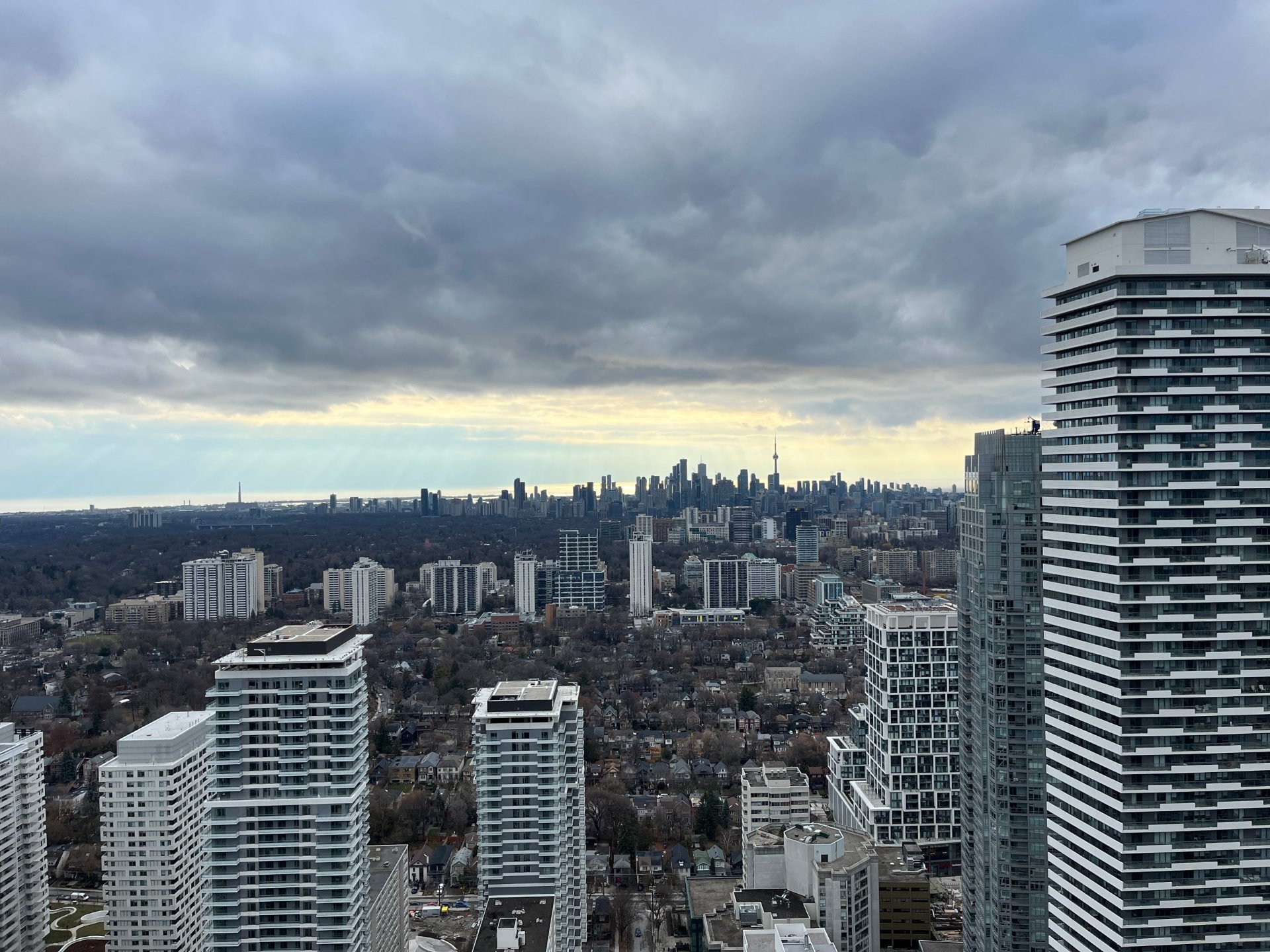
The Toronto skyline from a midtown condo tower.
Last updated: November 23, 2026. Rates come from the City of Toronto’s 2026 property tax rates page (updated May 11, 2026) and assessment details from MPAC. We’ll update this post each spring once the new rate is set.
In 1789, Benjamin Franklin wrote that nothing in this world can be said to be certain, except death and taxes. More than two centuries later, the line still holds up. And most of us understand about as much about one as the other.
Property tax is a good example. Almost every Toronto homeowner pays it, in instalments, every year. Very few could tell you how the number on the bill is worked out (and that’s fair, since it involves a home value from 2016 and a budget vote at City Hall).
Here’s what you need to know about Toronto’s 2026 property tax rate, how your bill is calculated, how Toronto compares with nearby cities and what buyers should plan for.
Toronto’s 2026 Property Tax Rate at a Glance
For 2026, Toronto’s residential property tax rate is 0.767311% of your home’s assessed value, according to the City’s 2026 property tax rates page. Put another way, you pay about $7.67 a year for every $1,000 of assessed value.
That rate is made up of three parts:
| Part of the rate | 2026 | 2025 |
|---|---|---|
| City tax rate | 0.605295% | 0.592653% |
| Education tax rate | 0.153000% | 0.153000% |
| City Building Fund | 0.009016% | 0.008434% |
| Total residential rate | 0.767311% | 0.754087% |
Source: City of Toronto, property tax rates and fees (2026 and 2025 tables).
The City portion pays for City services. The education portion is set by the Province, and it stayed at 0.153% for 2026. The City Building Fund is a dedicated levy that, according to the City’s 2026 budget launch release, supports transit and housing.
What the 2026 Increase Really Means
City Council approved the 2026 budget on February 10, 2026, with a combined residential increase of 2.2%: 0.7% for the City’s operating budget and 1.5% for the City Building Fund, according to the City’s final budget news release. For the average Toronto home, which MPAC assesses at $692,140, the City puts the increase at $91.53 a year, or $7.63 a month.
That’s well below 2025, when the City’s budget implementation report set a combined 6.9% increase.
Here’s the part that catches people. The 2.2% applies to the City’s share of the rate. The education rate didn’t move, so the total rate on your bill rose by about 1.75% (from 0.754087% to 0.767311%). If your assessment didn’t change, a home assessed at $1,000,000 paid about $132 more in 2026 than in 2025.
How Your Property Tax Bill Is Calculated

The tax rate is the same across Toronto; the assessed value is what changes the bill.
The formula is simple:
MPAC assessed value × total tax rate = your annual property tax
Let’s take a home with a round assessed value of $1,000,000:
| Part | Rate | Annual amount |
|---|---|---|
| City | 0.605295% | $6,052.95 |
| Education | 0.153000% | $1,530.00 |
| City Building Fund | 0.009016% | $90.16 |
| Total | 0.767311% | $7,673.11 |
That works out to about $639 a month. A home assessed at $500,000 would pay half that, about $3,837 a year.
The rate is the same everywhere in the city. A detached house in Forest Hill South and a condo in Yorkdale–Glen Park pay the same 0.767311%. What changes the bill is the assessed value, which is why taxes can differ so much from one street to the next.
Your assessed value is on your MPAC Property Assessment Notice, and your current bill is in the City’s Property Tax Lookup. If the assessed value looks low next to today’s prices, that’s expected. It’s based on 2016, which we’ll get to next. Curious what your home might sell for today? You can get a free estimate of your home’s value.
Why Assessments Are Still Based on 2016 Values
MPAC normally updates every property’s value across Ontario every four years. The last update used a January 1, 2016 valuation date. The next one, planned with a January 1, 2020 date, was postponed by the Ontario government because of the COVID-19 pandemic, according to MPAC’s assessment cycle page.
So for 2026, your assessment is what MPAC estimates your home would have sold for on January 1, 2016, in its current condition. If you’ve added a storey or finished the basement since then, those changes count. The market’s run-up since 2016 doesn’t.
What does that mean for your bill? A higher assessment doesn’t automatically mean higher taxes. According to the City’s property assessment page, what matters is how your value moves compared with the City average. Homes that rise by more than the average see an assessment-related increase, and homes that rise by less see a smaller share of the total.
If you disagree with your assessment, MPAC’s Request for Reconsideration process is the first step, and the deadline is printed on your notice (March 31 of the tax year for most owners).
How Toronto’s Rate Compares With Nearby Cities
Toronto’s rate sits near the low end of the GTA. Here are the 2026 total residential rates from each city’s own published figures (they include the regional portion for York and Peel cities):
| City | 2026 total residential rate | Tax on $1,000,000 assessed |
|---|---|---|
| Markham | 0.722889% | $7,228.89 |
| Vaughan | 0.749217% | $7,492.17 |
| Toronto | 0.767311% | $7,673.11 |
| Mississauga | 1.087901% | $10,879.01 |
| Brampton | 1.253381% | $12,533.81 |
Sources: City of Markham, City of Vaughan By-law 103-2026, Peel Region 2026 tax rates (Mississauga and Brampton).
One caution: the rate isn’t the whole story. A $1,000,000 assessment buys a different home in each city, and average assessments vary. Markham’s average residential assessment for 2026, for example, is $822,671, compared with $692,140 in Toronto. When you compare two homes, compare the actual tax bills.
When Toronto Property Tax Is Due and How to Pay
Toronto sends two bills a year. The interim bill arrives in February and is based on the previous year’s taxes. The final bill arrives in May, uses the new year’s rate and subtracts what you’ve already paid.
On the regular plan, the 2026 due dates were:
- Interim bill: March 2, April 1 and May 1
- Final bill: July 2, August 4 and September 1
If you’d rather not track dates, the City’s Pre-Authorized Tax Payment program withdraws payments from your bank account on a 2, 6 or 11 instalment schedule. The 11-instalment plan runs monthly from February to December, with a break in January. One thing it doesn’t cover: bills outside the regular schedule, such as supplementary or omitted tax bills and the Vacant Home Tax.
Late payments cost money. The City adds a late payment charge of 1.25% on the first day of default and again on the first day of every month the amount stays unpaid.
Help for Low-Income Seniors and Owners With Disabilities
The City runs two programs that can help with increases, both listed on its Property Tax and Utility Relief page:
- Property Tax Increase Cancellation Program: for owners with combined household income of $62,000 or less and a residential assessment under $975,000.
- Property Tax Increase Deferral Program: the same $62,000 income limit, with no assessment limit. Deferred amounts must be repaid when the property is sold.
Both are open to owners who are over 65, who are 60 to 64 and receiving the Guaranteed Income Supplement, or who receive disability benefits. The deferral program also includes owners over 50 who receive a pension from a registered pension plan. Applicants must have owned and lived in the home for at least a year, and must reapply every year.
The 2026 application window has closed. The City says to check back in spring 2027, and its page lists the documents you’ll need.
What Buyers Should Budget For

New and converted condos can come with their own tax surprises for buyers.
Property tax is easy to underestimate when you’re focused on the down payment and the mortgage. A few things we walk our buyer clients through:
- Start with the actual bill. Listings usually show the most recent annual taxes. Since the assessment stays with the property, last year’s bill plus the coming year’s increase is a better guide than applying the rate to your purchase price.
- Brand-new homes come with a catch-up bill. According to the City’s page on supplementary and omitted tax bills, the first bill on a new property may cover only the land. A separate bill for the building follows once MPAC assesses it, and MPAC can go back to the current year and two years prior. If you’re buying a new condo or house, it’s worth setting money aside for it.
- Renovations and additions can lead to a supplementary bill too.
- Being new doesn’t waive penalties. The City is clear that late charges apply even if you didn’t know an instalment was due, so check the account as soon as you close.
- The Vacant Home Tax is separate. Every owner has to declare each year. Our 2026 Vacant Home Tax declaration post covers the details.
If you’re putting a budget together, you can estimate your monthly costs, including property tax. Our post on the hidden costs of buying a home in Toronto covers the rest. Buying? You’ll also pay land transfer tax at closing, and our land transfer tax calculator shows how much.
What About 2027?
The 2027 rate hasn’t been set yet. The Mayor is required to present a proposed 2027 budget to Council by February 1, 2027, according to the City’s council briefing note.
In the meantime, the 2026 rate still shapes the start of next year. City staff have recommended that the 2027 interim bill be based on 50% of each property’s 2026 taxes. The 2027 rate will then show up on the final bill in late spring.
Will assessments still be based on 2016 values for 2027? MPAC hasn’t confirmed it yet. It’s a trend to watch, and we’ll update this post once the 2027 numbers are out. Buying or selling and not sure what the property taxes will look like? Get in touch with our team and we’ll walk you through it.
Frequently Asked Questions
What is the property tax rate in Toronto for 2026?
The 2026 residential rate is 0.767311% of your MPAC assessed value. It combines the City rate (0.605295%), the education rate (0.153%) and the City Building Fund (0.009016%).
What percentage of my home’s value do I pay in property tax in Toronto?
About 0.77% of your assessed value each year, or $7,673 on a $1,000,000 assessment. Keep in mind that the assessed value is based on January 1, 2016, so it’s usually different from what your home would sell for today.
How much did Toronto property taxes go up in 2026?
Council approved a 2.2% increase (0.7% operating plus 1.5% for the City Building Fund). Because the education rate stayed the same, the total rate rose about 1.75%. The City estimates the average home pays $91.53 more a year.
Why is my assessed value so much lower than my home’s market value?
Ontario’s last province-wide reassessment used January 1, 2016 values, and the next update was postponed. Your assessment reflects 2016 prices, adjusted for changes to your property since then.
Is Toronto’s property tax rate the lowest in the GTA?
It’s among the lowest. For 2026, Markham (0.722889%) and Vaughan (0.749217%) are slightly lower, while Mississauga and Brampton are above 1%. The rate is only half the picture, though, since assessed values differ from city to city.
The 2027 rate will be set early next year. Sign up for our monthly Toronto market update and we’ll let you know what changed.
For sale in Toronto
Luxury homes.


Still have questions?
Send us a message.
We’ll get back to you quickly.
Keep reading
More buying advice.


Have a question
Get a straight answer from our team.
Ask us anything about buying or selling in Toronto.