


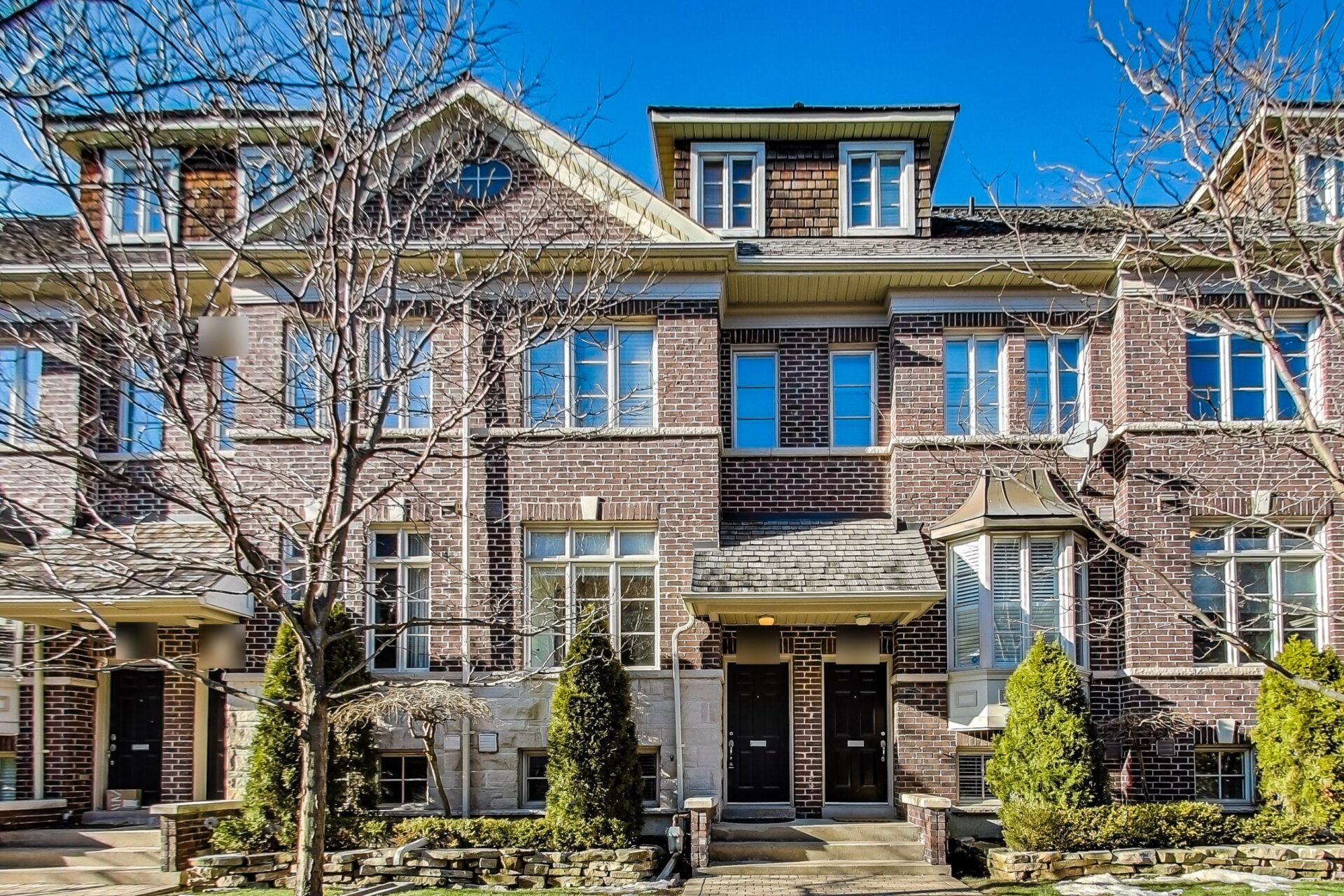
What Is a POTL Fee, and What Does It Cover?

A POTL (parcel of tied land) is a home you own as freehold, house and lot, that is tied to a common elements condominium corporation. The POTL fee is your monthly share of that corporation’s costs: the private road, visitor parking and other shared pieces that you and your neighbours own together.
If you’ve seen a townhouse listed as freehold with a monthly fee attached and wondered which one it really is, it’s a fair question. A POTL sits right between the two kinds of ownership most buyers already know, and it borrows a little from each.
Here’s how a POTL works, what the fee pays for (and what it doesn’t), how it compares to a condo fee, and what to check before you buy one.
What a POTL Actually Is
Ontario’s Condominium Act, 1998 allows a few different kinds of condo corporation. One of them, the common elements condominium corporation, has no units at all. According to the Condominium Authority of Ontario (CAO), it holds only common elements, shared by the owners of parcels of tied land that are legally attached to it.
In other words, your house and the land under it aren’t part of the condominium. They’re yours, as a freehold parcel. What comes with them is a share in the corporation that owns the shared property (the Act calls this your “common interest”).
That share is tied to your lot for good. Under section 139 of the Act, when the parcel is sold, or when a lender enforces a mortgage against it, the common interest isn’t severed; it stays attached to the parcel. When the corporation is created, a notice of attachment is registered against each parcel saying exactly that, which is why your lawyer will find it on title.
What the Common Elements Corporation Owns and Looks After
This varies a lot from one development to the next, so the only reliable answer for a specific home is in its declaration and budget. The CAO’s own examples range from shared roads to golf courses and ski hills, which tells you how wide the range can be.
In a typical Toronto POTL townhouse development, though, the common elements are the pieces that sit between the houses. Think of a private road or laneway, visitor parking, walkways, landscaped strips and sometimes a small parkette or shared mailbox area.
The fee pays to run and keep up those pieces. Depending on the development, that can include snow clearing and salting on the private road, landscaping, lighting, insurance on the common elements, property management, the annual audit and, in some developments, garbage pickup where the City doesn’t service a private road. Where there’s a shared amenity, such as a gym or party room, its upkeep comes out of the same fee.
Part of every fee also goes to the reserve fund, the corporation’s savings for big repairs down the road. We’ll come back to why that matters when we get to what to check before buying.
What the POTL Fee Usually Doesn’t Cover

With a POTL, the kitchen, the roof and everything in between are yours to look after.
This is the part that catches people. Your house sits on your own land, so the roof, windows, exterior walls, foundation, driveway and everything inside are yours to maintain, repair and replace, the same as any freehold home.
The same goes for insurance. The corporation insures the common elements it owns; your house is your responsibility, which usually means a regular homeowner’s policy rather than the unit-owner policy condo buyers carry. Ask your insurance broker to read the declaration with you so nothing falls between the two.
There can be exceptions. Some declarations give the corporation a role in something attached to the houses, or set requirements for how exteriors look and are kept up. That’s why we always say read the declaration, rather than assume, before you firm up an offer.
POTL Fee vs Condo Fee
Both fees go to a condominium corporation, and both are set from that corporation’s budget. What they pay for is very different, because what you own is different. In a standard condo, the CAO notes that common elements often include things like the exterior walls; in a POTL, those walls are yours.
| POTL fee | Condo fee (standard condo) | |
|---|---|---|
| What you own | Your house and lot as freehold, plus a common interest in the corporation | A unit as defined in the declaration, plus a share of the common elements |
| What the fee pays for | Shared pieces only: private road, visitor parking, landscaping, any amenities, management and the reserve fund | The building and grounds, amenities, management and the reserve fund; in many buildings, some utilities too |
| Who repairs the roof and exterior | You | Usually the corporation (check the declaration) |
| Insurance | The corporation insures the common elements; you insure your house | The corporation insures the building; you insure your unit’s contents and improvements |
| Rules | Declaration, by-laws and rules govern the common elements; the declaration may also set requirements for your home | Declaration, by-laws and rules apply to your unit and the common elements |
The difference shows up when something big wears out. In a standard condo townhouse, a new roof is usually a corporation project paid for through the reserve fund. In a POTL, the roof is your project and your bill, and the reserve fund is saving for the road and the other shared pieces.
Is a POTL the Same as a Freehold Townhouse?
They overlap more than the names suggest. With both, you own the house and the land under it as freehold, you look after your own roof, walls and windows, and you insure the house yourself.
The difference is the tie. A freehold townhouse in the usual sense has no condominium corporation behind it. A POTL comes attached to one, with a monthly fee, a board, a budget and a reserve fund. If you’re still sorting out the labels, our guide to the types of townhouses in Toronto puts freehold, condo and POTL side by side.
Listings don’t always make the difference obvious, since a POTL is still freehold ownership of the house and lot. When a townhouse is described as freehold, it’s worth asking whether it carries a monthly common elements fee. Your lawyer will confirm it on title, where the notice of attachment shows up.
Do Freehold Townhouses Have Maintenance Fees?
A true freehold townhouse doesn’t. There’s no corporation to pay, so the costs are simply your own: the roof, the driveway, the snow on your walk. If a “freehold” townhouse comes with a monthly fee, ask what it’s for; in most cases it means the home is a POTL tied to a common elements corporation.
What to Check Before Buying a POTL
The paperwork for a POTL looks a lot like a condo purchase, just with a smaller corporation behind it. Your offer should be conditional on your lawyer reviewing it.
The Status Certificate
A common elements corporation issues a status certificate just as a standard condo does. Ontario’s official status certificate form has its own instructions for common elements corporations, swapping “unit” for “parcel”. It tells you the current fee, whether the seller is behind on payments, and whether a lien has been registered against the parcel. We explain where to order a status certificate in a separate post.
The Reserve Fund and Budget
The reserve fund is money set aside only for major repairs and replacement of the common elements. According to the CAO, a corporation has to complete a full reserve fund study in its first year, then updated studies at least every three years. A private road doesn’t sound like much until it needs repaving, and that’s exactly the kind of cost the fund is there for. Our post on reserve fund red flags applies here too.
Special Assessments
If the reserve fund falls short of a big repair, owners can be asked to pay a special assessment on top of the monthly fee. The status certificate should disclose any that are planned, so read that part closely.
The Declaration and Rules
The declaration, by-laws and rules set out what the corporation looks after and how the shared spaces can be used, from visitor parking to garbage storage. They can also include requirements that affect your own house, so read them before you picture any changes to the front of the home.
Unpaid Fees Follow the Property
Under section 139 of the Act, if an owner doesn’t pay their share, the corporation has a lien against that owner’s parcel. That’s why a clean status certificate matters: arrears left by a seller can become a buyer’s problem if nobody catches them before closing.
Pros and Cons for Buyers

The house is yours; the fee pays for the shared pieces outside it.
The main appeal is ownership. You own the house and the land under it, so decisions about your roof, windows and renovations are largely yours rather than a board’s. At the same time, someone else plows the private road and keeps the shared landscaping tidy.
The fee is also narrower than a condo fee. It pays for the shared pieces of the development, not the building you live in, so you know exactly which costs you’re sharing and which ones are yours.
The trade-off is that you carry two sets of costs. There’s the monthly fee, and there’s the upkeep of your own house, which a condo fee would partly cover in a standard condo townhouse. It’s worth budgeting for both before you compare a POTL with a condo.
You’re also part of a corporation, with a board, a budget, rules and the chance of a special assessment. And because the term is less familiar, some future buyers will need it explained, which is a reason to keep your status certificate and paperwork in order when it’s your turn to sell.
POTL Fee Questions We Get Asked
Can a POTL Fee Go Up?
Yes. The board sets a budget each year, and the fee follows costs like insurance, snow clearing contracts and reserve fund contributions. According to the CAO, when a new reserve fund study calls for more money, the board has to send owners a notice of future funding, which is often the first sign an increase is coming.
Does a POTL Fee Affect Your Mortgage Approval?
It can. Lenders look at your monthly housing costs when deciding how much you can borrow, and CMHC’s rules for insured mortgages count half of condominium fees in those calculations. Lenders don’t all treat a POTL fee the same way, so ask your lender or mortgage broker how they’ll count it before you make an offer.
Can You Opt Out of the POTL Fee?
No. Your common interest is attached to your parcel, and under section 139 of the Condominium Act it stays attached when the home is sold. Every owner pays their share, and unpaid fees give the corporation a lien against the parcel.
What’s Next?
As more new townhouses go up on infill sites with private lanes and shared parking, will POTLs become a bigger share of what’s for sale in the city? It’s a trend to watch, and we’ll keep explaining the fine print as it comes up.
Looking for a townhouse, freehold or POTL? Get in touch with our team and we’ll set up townhouse alerts, so you hear about the right one the day it lists.
Sources checked November 10, 2026: Condominium Act, 1998, s. 139; Condominium Authority of Ontario guidance on condo types, reserve funds and special assessments; Ontario’s status certificate and notice of attachment forms; CMHC mortgage loan insurance guidelines. This post is general information, not legal advice; speak with a real estate lawyer about a specific property.
For sale in Toronto
Luxury homes.


Still have questions?
Send us a message.
We’ll get back to you quickly.
Keep reading
More buying advice.


Have a question
Get a straight answer from our team.
Ask us anything about buying or selling in Toronto.